Tattoo Peeling: What’s Normal, What’s Not, and How Long It Lasts
Somewhere around day four, most fresh tattoos start to flake. The skin lifts in dry, papery scraps, and when you look closely there is colour in them. Ink, on your sheets.
For a first tattoo, this is the moment panic sets in. It looks like the design is shedding. It is not. Your tattoo is not coming off.
Peeling is the most visible stage of tattoo healing and the most misunderstood one. This guide covers what is actually happening under those flakes, when peeling starts and stops, the second peel almost nobody mentions, the warning signs that genuinely matter, and how to get through the whole stage without losing colour to an impatient fingernail. None of it is complicated.
Why tattoos peel (and what’s actually shedding)
Tattoo peeling is the shedding of the damaged outer layer of skin, the epidermis, which a healing tattoo rebuilds during its first two to three weeks. A tattoo machine drives pigment through the epidermis and deposits it in the dermis, the deeper, stable layer of skin. The epidermis above takes the damage. Once a fresh layer has formed underneath, the damaged surface dries out and sheds, the same way skin sheds after a sunburn.
The flakes carry colour because they held some surplus pigment that never made it into the dermis. Ink saturates every layer it touches. The excess near the surface was always going to come away; it was never part of the permanent tattoo. What stays is the pigment sitting safely below. The flakes were never the tattoo.
The tattoo lives deeper than the peel. Peeling is shedding, not fading.
When peeling starts and how long it lasts
Most tattoos begin peeling between day 3 and day 7, and the stage lasts one to two weeks. The exact timing depends on the size of the piece, how saturated it is, where it sits on the body, and how dry your skin runs. The general arc looks like this.
Day 1–3: tight and shiny, no peel yet
The surface weeps a little plasma, then settles. The skin over the tattoo feels tight and looks slightly glossy. Nothing is flaking yet. This is the calm before the shed.
Day 3–7: the first flakes
Thin, dry flakes start lifting, usually from the edges of lines first. Heavily shaded or colour-packed areas follow a day or two later. Small pieces can finish inside this window. The itch usually arrives with the flakes; if it gets loud, the itching guide covers how to calm it without scratching.
Week 2: the peak
This is when the peel looks dramatic. Larger scraps come away, the colour underneath reads patchy while old surface and new skin sit side by side, and the temptation to help it along peaks with it. Let it fall when it’s ready.
End of week 2–3: done, mostly
For most medium pieces the visible peel finishes by the end of week two. Big pieces take longer. A full back or a heavily packed sleeve panel can run into week three. If your skin runs dry by default, expect the longer end of the range; the dry-skin healing guide explains why dry skin stretches every stage of the timeline.

The second peel nobody warns you about
Many tattoos peel twice. The first peel is the obvious one, the papery flakes with colour in them. A few days after it ends, a second, quieter shed often follows: a fine, translucent layer that makes the tattoo look waxy or slightly silvered, like it has been wrapped in tracing paper.
Artists call this second stage silver skin, or the ghost peel. It’s the epidermis finishing the job. It sheds in flakes too small to notice, which is why people think something is wrong with the tattoo’s shine rather than recognising a second peel.
Nothing about it needs a new routine. Keep the skin comfortable, keep applications thin, and the ghost peel clears on its own within a week or so.
Why your tattoo looks dull right after peeling
Fresh out of the peel, most tattoos look worse than they did on day one. The colour reads flat, milky, a little grey. This is optics, not ink loss.
You view a tattoo through the epidermis. The one that has just finished rebuilding is still immature. Its cells are compacting, its surface scatters light instead of letting it pass cleanly, and the pigment below reads muted through that cloudy window. As the new layer matures and holds moisture properly, it turns translucent again and the colour comes back. Research on skin hydration shows moisturisation measurably changes how light moves through the outer skin layers, which is exactly what you watch happening over the two or three weeks after the peel.
The same optical layer, decades on, is why old tattoos go dull long before the ink is gone. Different timescale, same window.
What’s normal, and what needs attention
Almost everything peeling does is normal. A short list of what belongs in each column:
Normal during the peeling stage:
- Flakes with colour in them — surplus surface pigment, not your tattoo leaving.
- Patchy peeling — lines, shading and colour packing shed on different schedules.
- Mild itch and tightness — regenerating skin and dryness, loudest in week two.
- Temporary dullness — the new epidermis hasn’t cleared yet.
- A second, silvery micro-peel — the ghost peel described above.
Not normal, and worth a phone call:
- Redness or heat that spreads after day three instead of fading.
- Swelling that increases rather than settles.
- Pus or cloudy discharge — plasma is clear to straw-coloured; pus is not.
- Fever, chills, or red streaks leading away from the tattoo.
- Thick, cracking scabs that keep re-forming, which raise the risk covered in the scarring guide.
That second list matches what Cleveland Clinic’s dermatologists warn about: infection is the one healing problem that needs medical attention rather than patience. If anything on it shows up, contact your artist and a doctor. This is aftercare guidance, not medical advice.
Why hands and necks peel differently
Placement changes the peel. More than most guides admit.
Hands live in water and friction. Every wash, every pocket, every gripped handle rubs at skin that is trying to shed on its own schedule, so hand tattoos usually peel earlier, faster, and patchier than anywhere else on the body. Knuckle skin also flexes constantly, which cracks drying flakes before they are ready to fall. The practical answer is more frequent, thinner applications, and patience with a peel that looks messier than the one on your forearm.
Necks sit under collars, hair, and sweat. The constant low-grade friction has a similar effect, and the skin there is thinner than on the limbs. If you’re healing one, the neck tattoo guide covers the full routine.
Joints — elbows, knees, wrists — stretch with every movement. Their peel runs a few days longer. And very fine work sheds so lightly you may barely see it; fine-line tattoos produce flakes to match their linework.

How to care for a peeling tattoo
The routine is simple. The discipline is thin layers.
Wash twice a day with lukewarm water and a mild, plain soap. No scrubbing, no loofah, just fingertips. Pat dry with a clean paper towel rather than a cloth towel, which carries bacteria and snags on lifting flakes.
Then moisturise. Apply a thin layer of a plant-based tattoo butter two to three times a day, and any time the skin feels tight or itchy between applications. Thin. I mean thin. If the tattoo is still glistening ten minutes later, you used too much. A suffocated peel goes soggy, sticks to clothing, and tears instead of falling.
What you apply matters just as much. A butter built on real plant fats holds moisture in the regenerating layer without sealing it airtight. The ingredients doing the work in a serious formulation are a familiar five:
- Shea butter (Butyrospermum parkii) — barrier-repairing fatty acids for skin that’s mid-shed.
- Mango butter (Mangifera indica) — elasticity for skin that flexes while it peels.
- Calendula (Calendula officinalis) — calms the irritation that arrives with the flakes.
- Vitamin E — protects settling pigment from the oxidative fading that starts early.
- Hypericum oil (Hypericum perforatum) — the old Italian skin-recovery remedy, made by macerating the flowers in olive oil for 40 days.
Those are the five hero ingredients. A real formulation carries carrier oils, a natural emulsifier and a preservation system around them — the engineering that holds the heroes together. The tattoo butter guide goes deeper on how to read a label.
Two things stay off a peeling tattoo. Petroleum-based ointments first: a heavy, airless seal traps sweat and plasma under the peel, softens flakes into a paste, and pulls at them when you wipe it away. If the ingredient list starts with petrolatum or mineral oil, save it for your boots.
Commodity drugstore moisturisers second. They’re water-based, built for shelf life, and carry cheap fragrance that stings on skin this raw.

What not to do while your tattoo peels
Most peeling problems are self-inflicted. The complete list of don’ts:
- Don’t pick or pull flakes — not even the big ones hanging by an edge. A flake removed early tears pigment out of skin that hadn’t released it yet, and that’s how solid colour turns patchy. Let it fall when it’s ready.
- Don’t scratch — tap the itch through clothing, or add a thin layer of butter. The itch is dryness talking.
- Don’t soak it — no baths, pools, hot tubs or sea until the surface has fully closed. The summer tattoo care guide has the exact swimming timelines.
- Don’t sun it — fresh epidermis burns absurdly fast. Shade and clothing now, sunscreen only once the surface has closed.
- Don’t over-apply — thick coats suffocate the peel and glue flakes down.
- Don’t exfoliate — no scrubs, acids or brushes anywhere near a healing piece, however tempting it is to “help” the flakes off.
Every month a client sends me the same photo: a large flake with a piece of the design clearly visible in it, and one panicked message underneath. Every time, the tattoo underneath is fine. The flake was always going to fall; the design was never in it.
Frequently asked questions
Is it normal for a tattoo to peel?
Yes. Peeling is an expected stage of tattoo healing, not a warning sign. The needle damages the outer layer of skin on its way to the dermis, and once a new layer has formed underneath, the old surface dries and sheds, usually starting between day 3 and day 7. The flakes often carry colour, which is surplus surface pigment rather than ink from the tattoo itself. The permanent design sits in the dermis, below the layer that peels. A tattoo that never visibly peels can be normal too; fine or small pieces sometimes shed too lightly to notice.
How long does tattoo peeling last?
One to two weeks for most tattoos. Peeling typically begins on day 3 to 7, peaks during the second week, and finishes by the end of week two for small and medium pieces. Large or heavily saturated work can peel into week three, and dry skin stretches the timeline further. Many tattoos then go through a second, much subtler shed of fine translucent skin, sometimes called the ghost peel, in the days after the visible flakes stop. If heavy peeling continues past a month, check in with your artist.
What happens if I accidentally pulled off a piece of peeling skin?
Usually nothing. If the flake was ready to fall, no harm is done. If it lifted early and you felt it tug, a small patch of colour may have come with it, and the honest answer is you won’t know until healing finishes. Don’t inspect it, don’t pull anything else, and keep the area clean and thinly moisturised. Judge nothing until week six, when the skin has fully settled. If a patch did lighten, a quick touch-up from your artist restores it; most artists include one.
Do tattoos peel twice?
Often, yes. The first peel is the visible one, dry flakes carrying traces of colour. A few days after it ends, many tattoos shed a second, finer layer of translucent skin that makes the surface look waxy or slightly silver. Artists call it silver skin or the ghost peel, and it’s the final part of the epidermis turning over. It needs no special treatment. Keep the same washing and thin-moisturising routine and it clears within about a week.
My tattoo isn’t peeling — is something wrong?
No. The amount a tattoo peels says nothing about how well it’s healing. Fine-line and small pieces often shed flakes too fine to see. Skin that’s kept consistently moisturised sheds gradually instead of in dramatic scraps. And tattoos healed under second-skin adhesive wraps do much of their peeling invisibly, inside the film. If the tattoo isn’t red, hot, swollen or weeping, a quiet peel is simply a quiet peel.
Should I keep moisturising while my tattoo peels?
Yes, without a break. Dryness is what makes the peeling stage crack, itch and tempt you into scratching. Apply a thin layer of a plant-based tattoo butter two to three times a day, and after every wash. The discipline is thickness: a layer that absorbs within minutes helps the peel; a greasy coat suffocates it and glues flakes to clothing. Skip heavy petroleum ointments and water-based drugstore moisturisers with cheap fragrance, both of which work against skin that’s mid-shed.
What I put on peeling tattoos in my own studio
I’m not going to pretend I’m neutral. My partners and I spent two years formulating a plant-based tattoo butter in Sicily, working with one of the most respected cosmetic manufacturers in southern Italy. We use the premium grade of shea and mango butter rather than the commodity grade, and real hypericum oil macerated the traditional way, 40 days in olive oil. It absorbs in minutes, which is exactly what a peeling tattoo needs, and nothing in the jar seals the skin airtight.
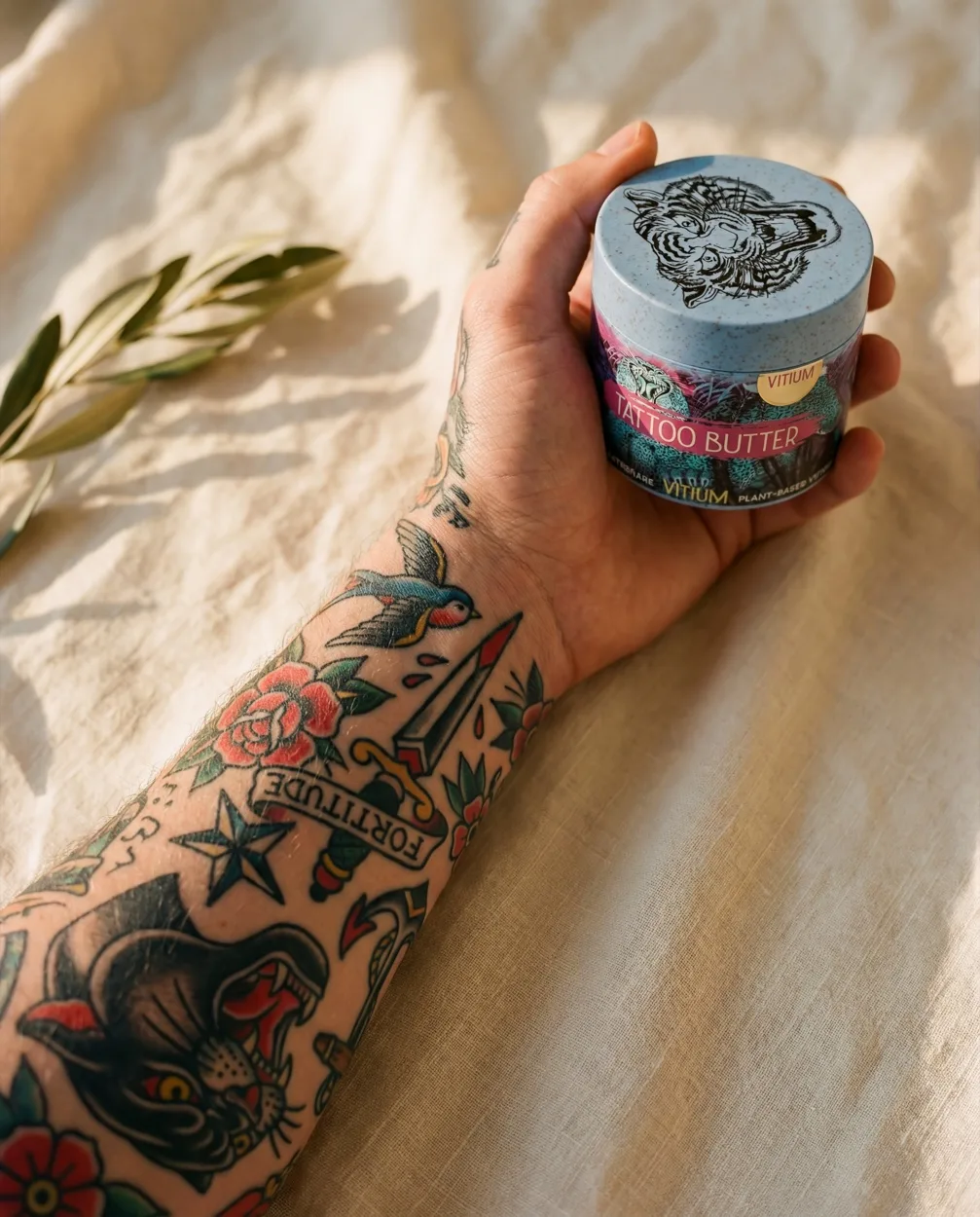
It’s called VITIUM Tattoo Butter, and it’s what goes on every fresh tattoo in my studio, from the first thin layer to the last ghost-peel flake. If you want to try it, the product page has everything you need.
But honestly, whether you use ours or another real plant-based butter, the principles in this article are what carry your tattoo through the peel. Keep it clean. Keep the layers thin. Keep your hands off the flakes.
Your tattoo deserves it.
— Gabriele B. Tattoo artist · Co-founder, VITIUM