Tattoo Scarring: How to Prevent It & What to Do About It
A tattoo done well shouldn’t leave a scar. The needle works in the dermis, the skin heals over it, and a few weeks later the surface is flat and smooth with the ink sitting cleanly underneath. When a tattoo does scar — raised, shiny, ridged along the lines — it’s almost never bad luck. It’s usually one of a small handful of preventable causes, and most of them are in your control or your artist’s.
So this guide is mostly about prevention, because that’s where you can actually change the outcome. What scarring actually is, what causes it, the two habits that cause most of it, and — if you already have a raised tattoo — what can realistically be done about it. One note up front: this is general guidance from a working tattoo artist, not medical advice. For anything painful, spreading, or worrying on your skin, see a doctor or dermatologist.
What tattoo scarring actually is
Not every bump or shiny patch on a healing tattoo is a scar. It helps to separate three things.
Normal healing texture. In the first weeks, a healing tattoo can feel slightly raised, shiny, or bumpy along the lines. This is normal and almost always settles flat within a few weeks to a couple of months as the skin finishes repairing. Most “is my tattoo scarred?” worries are actually this — healthy healing that hasn’t settled yet.
Hypertrophic scarring. A raised, firm scar that stays within the boundaries of the tattoo lines. It’s the skin overproducing collagen as it heals. It can flatten over months, sometimes with help, and is usually linked to how the tattoo was done or how it healed.
Keloid scarring. A raised scar that grows beyond the original lines of the tattoo. Keloids are tied to genetic predisposition rather than technique, and are more common in some people than others — a factor we cover in the guide to tattoos on dark skin. If you know you’re keloid-prone, tell your artist before you book and consider speaking to a dermatologist first.
Is it a scar, or just healing? A rough timeline
Because so much early texture is normal, it helps to know what to expect week by week, so you don’t mistake a healthy heal for a scar.
Week 1–2. The tattoo is healing as a wound. It may feel slightly raised and tender and look shiny — all normal. Scabs and flakes form. This isn’t scarring; it’s the repair in progress. The only job here is to leave it alone.
Week 2–4. Peeling finishes and the surface closes. The tattoo can still feel a little raised or firm along the heavier lines, and the skin may look faintly shiny. Still usually normal. Don’t judge the result yet.
Week 4–8. The surface is healed and most of that raised, shiny texture settles back toward flat. If lines are still clearly raised, firm, and ridged here — and especially if they’re getting more raised rather than less — that’s when normal texture starts to look like hypertrophic scarring.
Months 2–6. Genuine raised scarring softens slowly across this window, sometimes on its own, sometimes with help. A scar that’s flattening month over month is behaving normally. One that’s growing, spreading past the lines, or staying hard and painful is worth showing a dermatologist.
The simple rule: raised and shiny in the first month is almost always healing; raised and firm months later is when it’s worth attention.
What causes a tattoo to scar
Set keloids aside (those are about predisposition) and tattoo scarring comes down to a few causes, most of them avoidable:
- A heavy hand. The biggest one. An artist who works too deep or goes over the same line too many times traumatises the skin beyond what a tattoo needs. Correct depth and confident, even passes heal flat; overworking raises scars.
- Picking and scratching. Pulling scabs off early, or scratching an itchy heal, tears the repairing skin and invites raised scarring and lost colour.
- Infection. An infected tattoo heals badly, and badly-healed skin scars. Clean aftercare prevents this.
- Poor aftercare. Letting the skin crack and dry out, or smothering it in the wrong products, makes a rough heal more likely.
The pattern is clear: scarring is mostly a technique-and-aftercare problem, not an inevitability.

The two things that cause most scarring
If you control these two, you’ve removed most of the risk.
1. Picking or scratching the heal
A healing tattoo scabs and itches, and the urge to pick or scratch is real. Don’t. A scab pulled early takes pigment and tears the new skin underneath, and that torn skin is exactly what heals into a raised scar. If it itches, that’s usually dryness — apply a thin layer of butter or tap gently around the area, but never scratch. (Our guide to itchy tattoos covers safe relief in full.)
2. An inexperienced, heavy hand
Most scarring starts in the chair. An artist who packs lines too deep or reworks them repeatedly damages the skin past the point a clean tattoo requires. This is why artist selection matters so much: look at healed work in their portfolio, not just fresh shots, and look for crisp, flat results months out. A confident, experienced hand is the single best scarring-prevention measure there is.
How to prevent tattoo scarring
Putting it together, prevention is straightforward:
- Choose an experienced artist and review their healed work.
- Follow clean, gentle aftercare from day one — wash gently, keep it lightly moisturised, don’t let it crack. The aftercare basics apply directly.
- Never pick scabs or scratch. Let everything flake off on its own.
- Use a light plant-based butter, not petroleum. Calm, well-moisturised healing scars less than dry, cracked healing.
- Watch for infection and act early if you see spreading redness, heat, swelling, or pus.
- Protect it from the sun once healed, which keeps the whole piece — and any settling texture — looking its best.
What to do about an existing tattoo scar
If your tattoo has already healed raised, here’s the honest picture.
First, give it time. Raised healing texture and even mild hypertrophic scarring often soften and flatten on their own over several months. Don’t judge a fresh heal too early.
Beyond patience, the commonly used, non-aggressive options people turn to are gentle massage of the fully healed area to help soften raised tissue, and silicone gels or sheets, which are widely used for raised scars. These are things to raise with a dermatologist rather than improvise — a professional can look at your specific scar and advise what’s appropriate, and that’s the right path for anything significant. There are also in-clinic options a dermatologist may discuss for stubborn scarring. I’m a tattoo artist, not a doctor, so on treatment I’ll point you to one rather than pretend otherwise.
Finally, on the tattoo itself: once a scar is fully mature and flat enough, an experienced artist can sometimes tattoo over or around it to disguise it, though scarred skin behaves differently and not every scar is a candidate. That’s a conversation for an artist who has done a lot of cover and rework.

Frequently asked questions
Do tattoos always scar?
No. A tattoo done at the correct depth and healed well leaves no scar — the skin heals flat and smooth with the ink sitting cleanly underneath. Scarring is the exception, not the rule, and it’s usually caused by a heavy-handed application, picking or scratching during healing, infection, or poor aftercare. Choose an experienced artist, follow clean aftercare, and never pick scabs, and the odds of scarring are very low.
Why is my new tattoo raised and bumpy?
In the first few weeks, a slightly raised, shiny, or bumpy texture along the lines is usually normal healing, not a scar. As the skin finishes repairing, it typically settles flat within a few weeks to a couple of months. Keep up gentle aftercare and don’t pick at it. If a raised area persists well beyond healing, stays firm, or grows, it may be a hypertrophic scar or, less commonly, a keloid — worth showing a dermatologist.
What’s the difference between a hypertrophic scar and a keloid?
A hypertrophic scar is raised but stays within the boundaries of the original tattoo lines, and often flattens over months. A keloid grows beyond the original lines and is tied to genetic predisposition rather than to how the tattoo was done. Hypertrophic scarring is usually linked to technique or healing; keloids are more about individual predisposition. If you’re keloid-prone, tell your artist before booking and consider speaking to a dermatologist first.
Can you tattoo over a scar?
Often, yes, but with caveats. A scar needs to be fully mature and flat enough, and scarred skin takes ink differently from normal skin, so results vary. An experienced artist who does a lot of cover-up and rework can assess whether a particular scar is a good candidate and adjust their approach. It’s not a guarantee, and very raised or sensitive scars may not be suitable. Always consult an artist with proven scar-work experience.
How do I prevent a tattoo from scarring?
Choose an experienced artist and review their healed work, follow gentle aftercare from day one, and never pick scabs or scratch the healing tattoo. Keep the skin lightly moisturised with a plant-based butter rather than petroleum, watch for signs of infection, and protect the healed tattoo from the sun. Most scarring traces back to a heavy-handed application or picking during healing, so the right artist plus disciplined aftercare removes most of the risk.
How long does a tattoo scar take to fade?
Normal raised healing texture usually settles flat within four to eight weeks. A genuine hypertrophic scar softens more slowly — often over several months, sometimes up to a year or more — and may need help from gentle massage or silicone to flatten fully. Keloids don’t resolve on their own and need a dermatologist. The encouraging sign is direction: a scar getting flatter month by month is healing normally, while one staying raised or growing is worth a professional opinion.
When should I see a doctor about a tattoo scar?
See a doctor or dermatologist if a tattoo area is increasingly raised, painful, spreading, or shows signs of infection like heat, swelling, or pus, and for any raised scar you want assessed or treated. A professional can tell a normal heal from hypertrophic or keloid scarring and advise on options. This article is general information from a tattoo artist, not medical advice — anything that concerns you on your skin is worth a professional opinion.
What I tell my own clients
I’m not going to pretend I’m neutral about aftercare. I’ve tattooed for sixteen years on Ortigia Island in Sicily, and in that time the scarred tattoos I’ve seen came almost entirely from two places: a heavy hand in the chair, and a client who couldn’t stop picking at home. Both are avoidable. A clean, calm, well-moisturised heal is a flat heal.
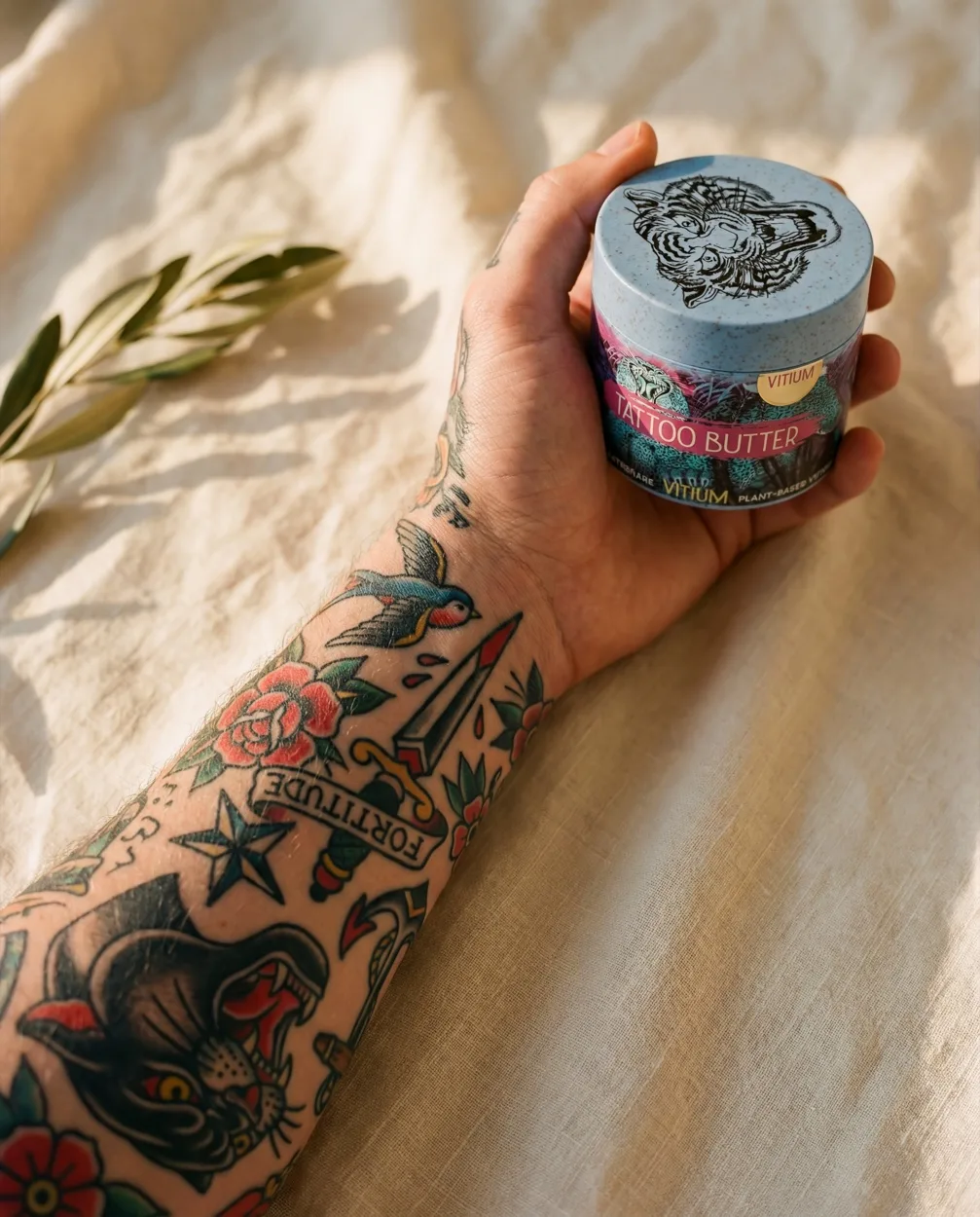
My partners and I spent two years formulating a plant-based tattoo butter in Sicily for exactly that calm kind of healing — light, no petroleum, with real Vitamin E. It’s called VITIUM Tattoo Butter, and the product page has the details. But honestly, the most important things in this article cost nothing: pick a good artist, keep it clean, and don’t scratch.
Your tattoo deserves it.
Gentle, non-occlusive aftercare helps skin heal cleanly — our guide to tattoo butter explains what to use and what to avoid.
— Gabriele B. Tattoo artist · Co-founder, VITIUM