Tattoo Itching: How to Stop the Itch While It Heals
An itchy healing tattoo is one of the most normal and most maddening parts of the whole process. Around the time it starts to peel, the itch can become genuinely hard to ignore — and you cannot scratch it. Scratching a healing tattoo is how people wreck good work: it lifts colour, tears the new skin, and can leave a scar. So the goal is simple but not always easy: calm the itch without touching it.
The good news is that most healing-stage itching is harmless and has a few reliable, gentle fixes. This guide covers why tattoos itch, how to get relief safely, the things that make it worse, and the less common situation where an itchy tattoo is actually a sign to get it looked at. One note first: this is general guidance from a working tattoo artist, not medical advice — if something looks like an allergic reaction or infection, see a doctor.
Why tattoos itch while they heal
Itching is part of normal wound healing, and a fresh tattoo is a wound. A few things drive it.
The healing response. As the skin repairs, it releases histamine — the same compound behind most itches — and ramps up cell activity in the area. That biological busyness registers as itch.
Dryness. This is the big one. As a tattoo moves into the peeling stage, the surface dries and flakes, and dry, flaky skin itches. Most healing-tattoo itch is really dryness itch, which is why a thin layer of moisture often settles it within minutes.
New, sensitive skin. The fresh skin forming over the tattoo is thin and reactive, and even light contact or warmth can set off an itch while it toughens up.
The itch usually peaks during the peeling week — roughly the second week of healing — then fades as the surface finishes closing. An older, fully healed tattoo that suddenly itches is a different situation, covered near the end.

Day-by-day: when a tattoo itches most
Itching follows the healing arc, so you can see it coming.
Day 0–2. Little to no itch. The tattoo is wrapped or under second-skin, fresh and tender rather than itchy.
Day 3–6. The itch begins. As the wrap comes off and the surface starts to dry, the first real itching sets in, usually mild.
Day 6–14 — the peak. This is the peeling week, and it’s when itching is at its worst. Flakes lift, the skin underneath feels tight and dry, and the urge to scratch is strongest. This is the danger window — it’s exactly when people give in and damage the tattoo. Lean hard on the gentle fixes here: thin butter, cool compress, tapping, loose clothing.
Week 3–4. As peeling finishes and the surface closes, the itch fades quickly. The occasional dryness-itch can linger, settled easily with a thin layer of moisturiser.
Beyond a month. A fully healed tattoo shouldn’t itch persistently. The odd dry-skin itch is normal and a moisturiser fixes it; persistent itching, or itching that starts on an old tattoo, is the situation worth attention, covered below.
If you know the peak is coming around day six to fourteen, you can be ready for it instead of caught out — and being ready is most of how people get through the itchy week without touching their tattoo.
The two things that make itching worse
Before the relief, the two habits to avoid — because they turn a manageable itch into a real problem.
1. Scratching or picking
The obvious one, and the most damaging. Scratching a healing tattoo tears the repairing skin, lifts scabs and pigment, and opens the door to infection and scarring. Even rubbing it through clothing counts. However bad the itch gets, the tattoo has to heal untouched — the itch passes, lost colour and scars don’t.
2. Petroleum and cheap, heavily perfumed products
Reaching for a thick petroleum ointment or a cheap, heavily perfumed lotion to “soothe” an itch usually backfires. Petroleum suffocates the skin, and cheap fragrance irritates already-reactive healing skin, which can make the itch worse. The fix for itch is gentle moisture, not more product or stronger product.
Safe ways to relieve the itch
Here’s what actually works, none of it involving scratching.
- A thin layer of plant-based butter. Since most healing itch is dryness, a light layer of a quality plant-based butter calms it fast. Reapply thinly when the itch returns — but don’t overdo it; a soggy tattoo brings its own problems.
- A cool compress. A clean, cool (not ice-cold) damp cloth held gently against the tattoo for a few minutes numbs the itch without damaging anything. Don’t soak the tattoo — just brief, gentle contact.
- Tap, don’t scratch. If you must do something, tap or gently pat the skin around the tattoo. It interrupts the itch without tearing skin.
- Loose, breathable clothing. Friction and heat both trigger itching. Loose cotton over a healing piece reduces both.
- Keep it clean and cool. Heat and sweat make itching worse, so stay cool and keep the area clean during the itchy phase.
If the itch is severe and relentless, some people ask their pharmacist or doctor about an oral antihistamine — that’s a question for them, not something to assume. Never put a numbing or anti-itch cream on a healing tattoo without professional advice.
The mindset that helps most: treat the itch as information, not an emergency. It’s the skin telling you it’s healing and a little dry, and the answer is moisture and patience, not your nails. Set a small routine for the itchy week — a thin layer of butter morning and night as part of your normal aftercare, a cool cloth kept ready for the bad moments, and loose sleeves so nothing rubs. People who go in with that plan get through the peak far more easily than people who try to white-knuckle it, because the itch always feels worse when the only thing you’re doing is resisting it.

When an itchy tattoo is a warning sign
Most itching is just healing. Some isn’t. Get it looked at by a doctor or dermatologist if you see:
- A spreading rash, hives, or raised welts around or over the tattoo — possible allergic reaction.
- Swelling, heat, oozing, or pus with the itch — possible infection.
- Itching that starts on an old, long-healed tattoo, especially if the skin raises along certain colours. Delayed reactions to tattoo ink can appear months or years later, most often with certain pigments, and that’s worth a dermatologist’s eye.
- Itching that won’t settle well past the normal healing window.
None of these are common, and none should make you anxious about a normal heal — but they’re the signs that mean a professional, not another layer of butter.
Frequently asked questions
Why is my tattoo so itchy while it’s healing?
Itching is a normal part of healing. As the skin repairs it releases histamine and increases cell activity, both of which cause itch, and as the tattoo enters the peeling stage the surface dries out — and dry skin itches. Most healing-tattoo itch is really dryness, which is why a thin layer of moisture usually calms it quickly. The itch typically peaks during the second week and fades as the surface finishes healing.
How do I stop a tattoo from itching without scratching?
Apply a thin layer of a light plant-based butter to calm the dryness that drives most itching, and use a clean, cool damp cloth held gently against the area for a few minutes. If you need to do something with your hands, tap or pat the skin around the tattoo rather than scratching it. Wear loose, breathable clothing and stay cool, since heat and friction make itching worse. Never scratch, pick, or rub a healing tattoo.
Is it normal for a tattoo to itch?
Yes, very. Itching is one of the most common parts of tattoo healing and usually peaks during the peeling stage in the second week. It’s driven by the skin’s natural healing response and by dryness as the tattoo flakes. As long as there’s no spreading rash, swelling, or signs of infection, an itchy healing tattoo is normal and will settle as the skin closes. The key is to relieve it gently and never scratch.
Can I scratch a healing tattoo if it itches badly?
No, never. Scratching a healing tattoo tears the new skin, lifts scabs and pigment, and can cause infection and scarring — the itch is temporary, but lost colour and scars are permanent. If the itch is severe, calm it with a thin layer of butter, a cool compress, gentle tapping around the area, and loose clothing. If it’s truly unbearable, ask a pharmacist or doctor about an oral antihistamine rather than scratching or applying a random cream.
Why does my old, healed tattoo itch?
An occasional brief itch on an old tattoo is usually nothing — often just dry skin, and a moisturiser settles it. But itching that starts on a long-healed tattoo and comes with raised skin, especially along specific colours, can signal a delayed reaction to the tattoo ink, which can appear months or years after the tattoo. If an old tattoo itches persistently or raises up, have a dermatologist look at it rather than guessing.
When should I worry about an itchy tattoo?
See a doctor or dermatologist if the itch comes with a spreading rash, hives, swelling, heat, oozing, or pus, or if it starts on an old tattoo with raised skin along the colours, or simply won’t settle long after the normal healing window. These are uncommon, but they point to a possible allergic reaction or infection rather than normal healing. Ordinary healing itch, by contrast, is mild, peaks during peeling, and fades on its own.
What I tell my own clients
I’m not going to pretend I’m neutral about aftercare. I’ve tattooed for sixteen years on Ortigia Island in Sicily, and the itchy week is when I get the most panicked messages — and the most damage, when someone gives in and scratches. The clients whose tattoos heal perfectly are simply the ones who left the itch alone and kept the skin lightly moisturised.
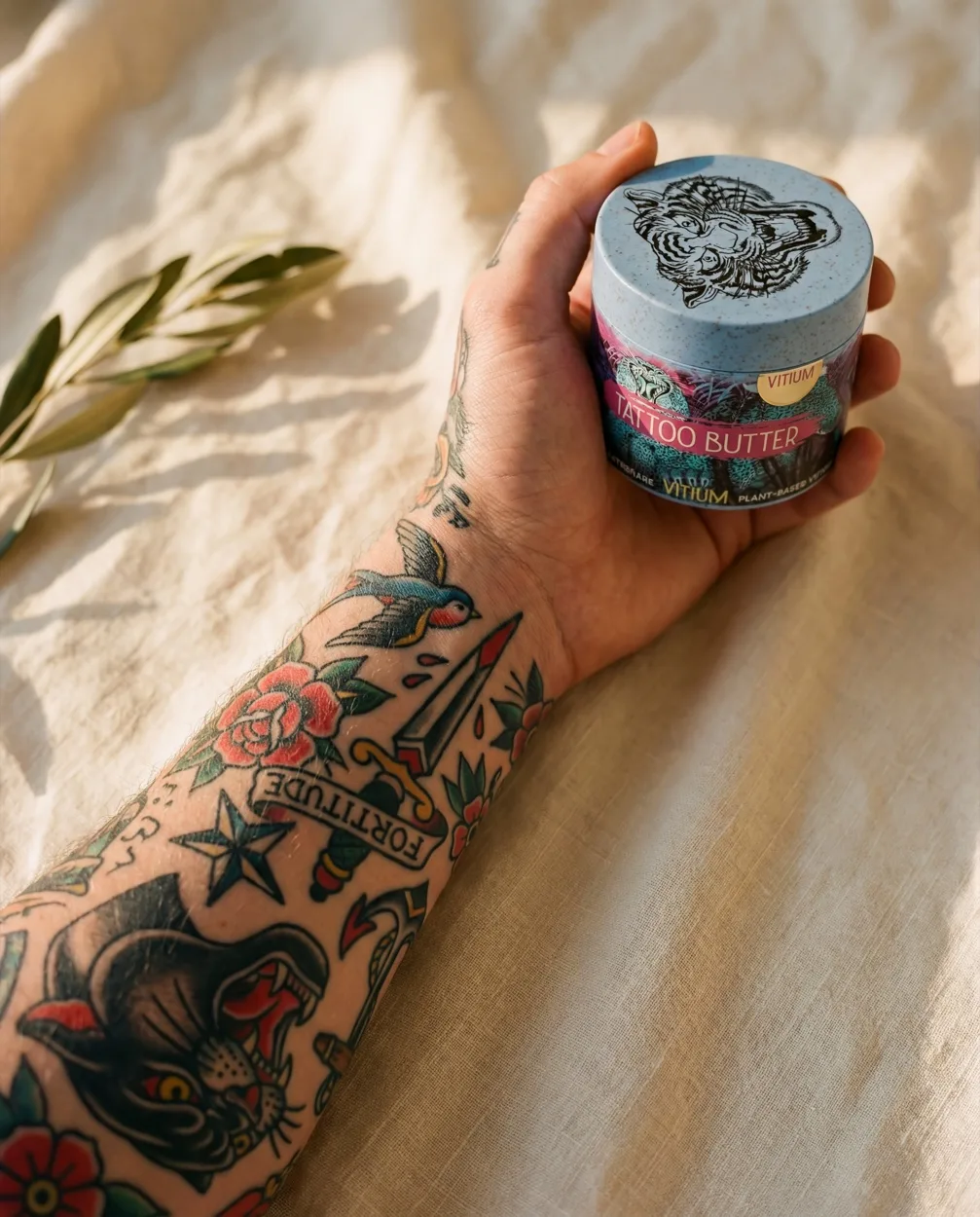
My partners and I spent two years formulating a plant-based tattoo butter in Sicily for that calm kind of healing — light, no petroleum, with real Vitamin E — and a thin layer of it is the quickest fix for dryness itch I know. It’s called VITIUM Tattoo Butter, and the product page has the details. But honestly, whether you use ours or another real plant-based butter, the rule that matters is free: never scratch.
Your tattoo deserves it.
— Gabriele B. Tattoo artist · Co-founder, VITIUM