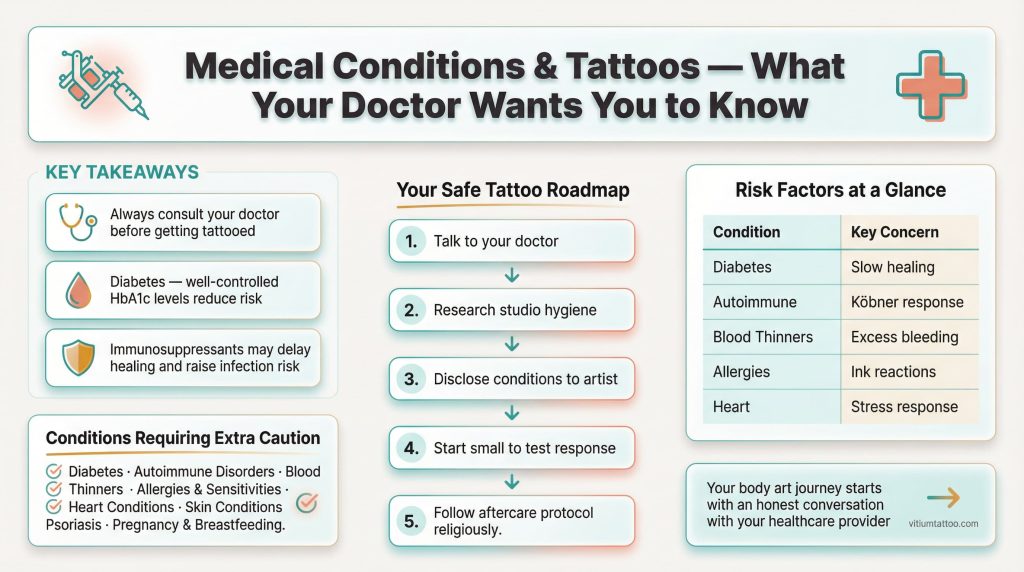
Now then, let us embark upon a subject that straddles the delightfully rebellious world of body art and the rather more austere realm of medical science. If you’ve ever found yourself gazing longingly at a tattoo parlour window whilst simultaneously clutching a prescription from your GP, you’ve stumbled upon precisely the conundrum we’re about to untangle. The question of whether your particular medical circumstance might complicate your journey toward permanent skin adornment is, I’m pleased to report, one with answers — though they require rather more nuance than a simple thumbs up or down.
The Fascinating Intersection of Medicine and Body Art
Tattooing, at its essence, is a controlled injury to your largest organ — the skin. This remarkable biological barrier, measuring approximately 20 square feet in the average adult, must respond to thousands of microscopic needle punctures whilst simultaneously accepting foreign pigments into its dermal layer. For most of us, this process unfolds with nothing more dramatic than some temporary swelling and the occasional urge to scratch. However, for those navigating certain medical conditions, this same process demands considerably more forethought and, critically, an honest conversation with your healthcare provider.
What your doctor genuinely wants you to understand is this: having a medical condition doesn’t necessarily disqualify you from getting tattooed. Rather, it means you must approach the endeavour with the same careful consideration you’d apply to any significant health decision. The goal, after all, is emerging from the experience with both a magnificent piece of art and your wellbeing intact.

Diabetes and Blood Sugar Considerations
Perhaps no condition generates quite as many questions in tattoo circles as diabetes. This metabolic disorder, affecting roughly 37 million Americans according to the Centers for Disease Control and Prevention, influences how your body heals wounds — and make no mistake, a tattoo is indeed a wound, albeit an artistically intentional one.
The crux of the matter lies in blood sugar management. Well-controlled diabetes, where HbA1c levels remain within target ranges, typically presents minimal additional risk. However, poorly managed diabetes introduces genuine concerns: compromised circulation, particularly in extremities, can impede the delivery of oxygen and nutrients essential for healing. Additionally, elevated blood glucose creates an environment where bacteria thrive rather more enthusiastically than we’d prefer.
The practical advice? Consult your endocrinologist or GP before booking that appointment. Avoid tattooing areas with compromised circulation, such as the lower legs and feet in those with peripheral neuropathy. Time your session for periods of stable blood sugar, and be especially vigilant about aftercare protocols during the healing period.
Autoimmune Disorders: A Complex Landscape
The autoimmune spectrum — encompassing conditions from lupus to rheumatoid arthritis, from psoriasis to Crohn’s disease — presents a particularly intricate puzzle. These conditions share a common thread: an immune system that has, rather inconveniently, turned its formidable arsenal against the body’s own tissues.
The concern with tattooing isn’t merely the condition itself but often the medications used to manage it. Immunosuppressants, while brilliantly effective at calming overactive immune responses, simultaneously diminish your body’s capacity to fight infection. Biologics such as adalimumab or etanercept, TNF inhibitors, and corticosteroids all merit serious discussion with your rheumatologist or dermatologist before you even contemplate stepping into a studio.
Furthermore, conditions like psoriasis introduce the phenomenon known as the Köbner response — where trauma to the skin (yes, including tattoos) can trigger new lesions at the injury site. This doesn’t mean psoriasis sufferers cannot get tattooed; it means they must choose timing wisely, ideally during periods of remission, and understand the risks involved.
Blood-Thinning Medications and Bleeding Concerns
If you’re taking anticoagulants such as warfarin, rivaroxaban, or even daily aspirin, your blood has been deliberately modified to clot less readily. This presents an obvious consideration when one contemplates being repeatedly punctured by needles. Excessive bleeding during a tattoo session isn’t merely inconvenient — it can literally wash pigment from the skin before it has opportunity to settle, resulting in patchy, faded results and potentially prolonged healing times.
The research published in various dermatological journals, including those indexed by the National Institutes of Health, suggests that whilst blood thinners needn’t preclude tattooing entirely, they do warrant conversation with your prescribing physician. Never — and I cannot stress this sufficiently — never discontinue prescribed anticoagulants without medical supervision. The risks of stroke or pulmonary embolism vastly outweigh any tattoo-related concerns.
Your tattoo artist should be informed about your medication, as they may need to adjust their technique and be prepared for additional bleeding. Proper hygiene and safety protocols become even more critical in these circumstances.
Allergies and Skin Sensitivities
The American Academy of Dermatology notes that allergic reactions to tattoo ink, whilst relatively uncommon, do occur — and they can manifest years after the initial tattooing. Red and yellow pigments historically prove the most problematic, containing compounds that trigger immune responses in susceptible individuals.
If you’ve experienced contact dermatitis, have a history of severe allergic reactions, or possess known sensitivities to metals such as nickel (commonly present in some ink formulations), a patch test before committing to a full design is remarkably sensible. This involves applying small amounts of ink to inconspicuous areas and monitoring for reactions over several weeks.
Understanding why tattoos swell and potential allergic causes can help you distinguish between normal healing responses and genuine allergic reactions requiring medical attention. Symptoms warranting concern include persistent swelling beyond the first few days, spreading redness, warmth suggesting infection, or unusual bumps forming within the tattooed area.
Heart Conditions and Circulatory Issues
Cardiovascular conditions introduce considerations beyond mere healing. Certain heart conditions may preclude the use of lidocaine-based numbing agents that some studios offer. Additionally, the stress response to tattooing — yes, your body does recognize it as a stressful event — can temporarily elevate blood pressure and heart rate. For those with serious cardiac conditions, this physiological response merits discussion with your cardiologist.
Individuals with pacemakers or implantable cardioverter-defibrillators should note that whilst the tattooing process itself doesn’t interfere with these devices, certain locations may be inadvisable, and the stress response remains a consideration worth addressing.
Skin Conditions and Dermatological Concerns
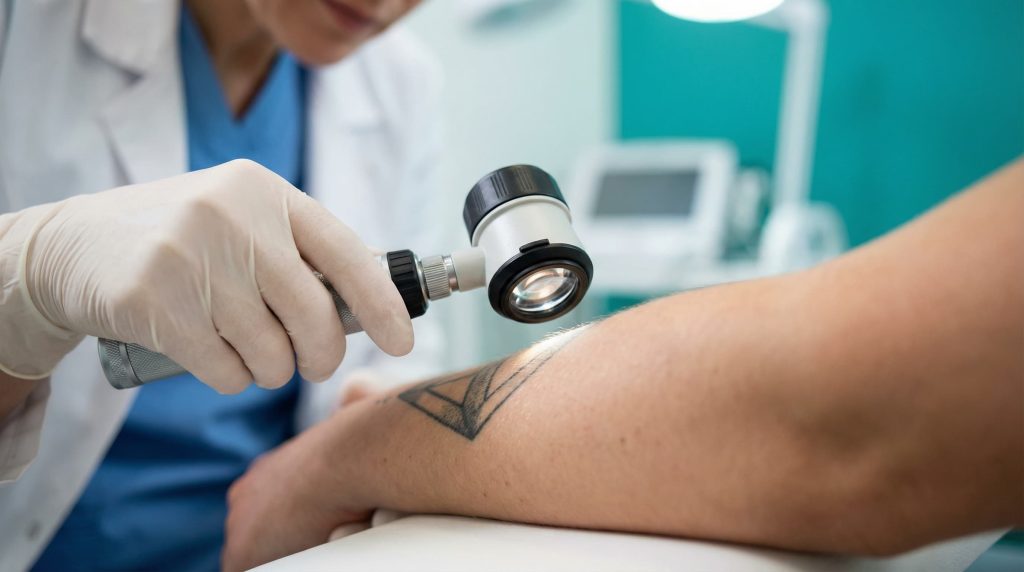
Eczema, rosacea, vitiligo, and acne each present unique considerations for the prospective tattoo enthusiast. The Mayo Clinic advises that tattooing over active skin conditions is generally inadvisable — not merely because results may prove unpredictable, but because the trauma can exacerbate underlying conditions.
The good news is that many dermatological conditions cycle through periods of activity and remission. Finding the right tattoo artist who understands skin conditions and timing your tattoo during a quiet phase can dramatically improve outcomes. A skilled artist will assess your skin condition honestly and may recommend postponement if conditions aren’t optimal.
Pregnancy and Breastfeeding
Whilst not strictly a medical condition, pregnancy and breastfeeding merit mention. The overwhelming medical consensus suggests postponement. The theoretical risks — including infection that could affect the developing fetus, potential complications from stress responses, and the unknown effects of ink components on fetal development — simply aren’t worth gambling upon. Most reputable studios will, quite rightly, decline to tattoo pregnant clients.

Practical Steps Before Getting Inked
The path forward for those with medical conditions involves several prudent steps. First, engage in frank conversation with your healthcare provider. They’re not there to judge your aesthetic choices but to help you make informed decisions about your body. Second, research your chosen studio’s hygiene protocols and aftercare guidance; higher standards become more critical when your healing capacity is compromised.
Third, consider starting small. A modest tattoo allows you to observe how your particular physiology responds to the process before committing to more extensive work. Understanding the tattoo healing timeline week by week helps you recognize normal progression versus concerning complications.
Finally, maintain impeccable communication with your artist. Disclose your conditions — they’ve almost certainly encountered clients with similar circumstances and can adapt their approach accordingly. A professional artist values your safety above all else and would rather postpone a session than risk your health.
The Bottom Line
The magnificent human desire to adorn our bodies with meaningful art needn’t be abandoned simply because our internal machinery doesn’t function entirely to factory specifications. What it does require is honesty, preparation, and the wisdom to recognize that some additional precautions represent not obstacles but simply different routes to the same destination.
Your doctor genuinely wants you to make informed choices. They understand that a tattoo can carry profound personal significance — marking survival, celebrating identity, or simply expressing the fundamental human desire for beauty. What they hope you’ll understand is that a conversation beforehand, perhaps a few additional precautions, and extra vigilance during healing are small prices for ensuring your permanent art doesn’t come with permanent complications.
Now, go forth and make informed decisions. Your skin, remarkable organ that it is, will thank you for the consideration.