There exists, in the grand catalogue of human impulses, a peculiar tendency to attempt at home what ought properly to be left to professionals. We’ve all witnessed the aftermath: the haircuts that look as though they were administered by a blindfolded Edward Scissorhands, the plumbing repairs that transform bathrooms into indoor water features, and the culinary experiments that somehow manage to set fire to salad. Yet none of these domestic disasters quite matches the potential for permanent regret as the DIY tattoo—that curious practice of puncturing one’s own epidermis with needle and ink in the hopeful pursuit of body art.
The stick-and-poke method, as it’s romantically called by its devotees, has enjoyed something of a renaissance in recent years. Social media platforms overflow with images of delicate hand-poked designs, and one can almost hear the siren song calling from Pinterest: “How difficult can it be, really? It’s just a needle and some ink. Our ancestors managed perfectly well without sterile environments and professional training.” To which I must respond, with all the gentle firmness I can muster: our ancestors also died of infected splinters and considered leeches a sensible medical intervention.

The Seductive Appeal of Self-Administered Body Art
One cannot deny the romance of the notion. The stick-and-poke tattoo carries with it a whiff of rebellion, a connection to ancient tattooing traditions that predates the buzz of electric machines and the clinical hum of modern studios. There’s something rather appealing about the intimacy of the process—the slow, deliberate puncturing of skin, each dot a meditation, each mark a conscious choice made at human speed rather than mechanical velocity.
The appeal is particularly strong among younger adults seeking affordable self-expression. A professional tattoo, even a modest one, can cost several hundred pounds. A stick-and-poke kit purchased online? Perhaps twenty quid, if one is feeling extravagant. The mathematics seem irresistible—until one factors in the potential cost of medical treatment for infections, laser removal procedures, or the psychological burden of wearing a regrettable mistake on one’s person for the remainder of one’s mortal existence.
The Biology of What You’re Actually Doing
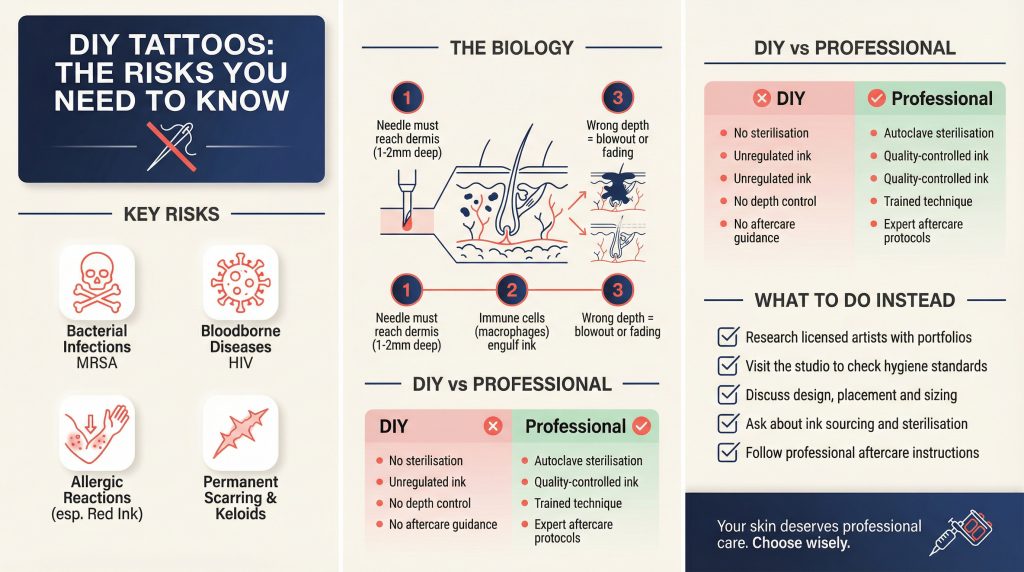
Let us examine, with scientific precision, what tattooing actually involves. When a needle penetrates your skin, it must reach the dermis—the second layer of skin, situated approximately one to two millimetres beneath the surface. Too shallow, and your lovely design will exfoliate away within weeks like a disappointing tan. Too deep, and you risk what professionals call a tattoo blowout—a phenomenon where ink spreads beneath the skin like an unfortunate watercolour left in the rain, transforming your carefully planned butterfly into something resembling a Rorschach test.
Professional tattoo artists undergo extensive training to develop the tactile sensitivity required for consistent needle depth. They understand the varying thickness of skin across different body parts—the thin, delicate dermis of the inner wrist versus the thicker hide of the upper arm. They can feel the subtle give of the needle entering the correct layer, adjusting their technique in real-time based on the skin’s response. The amateur, meanwhile, is essentially performing surgery whilst blindfolded and consulting a YouTube tutorial between pokes.
According to research published in the National Institutes of Health, the tattooing process triggers an immune response involving macrophages and fibroblasts—cells that attempt to engulf the foreign ink particles. In professional settings with sterile equipment and proper technique, this response is managed and controlled. In DIY situations, the introduction of bacteria alongside ink can transform this natural immune response into a full-scale infection.
The Rogues’ Gallery of Potential Infections
I shall not mince words here, for the risks are substantial and the consequences potentially severe. The American Academy of Dermatology has documented numerous cases of infections resulting from amateur tattooing, ranging from the merely unpleasant to the genuinely life-threatening.
Staphylococcus aureus, that persistent troublemaker of the bacterial world, finds open wounds particularly inviting. In its more aggressive form, MRSA (methicillin-resistant Staphylococcus aureus), it becomes resistant to common antibiotics, requiring hospitalisation and intravenous treatment. One does not wish to explain to medical professionals that one’s serious infection resulted from attempting to tattoo a small star on one’s ankle using a sewing needle and pen ink.
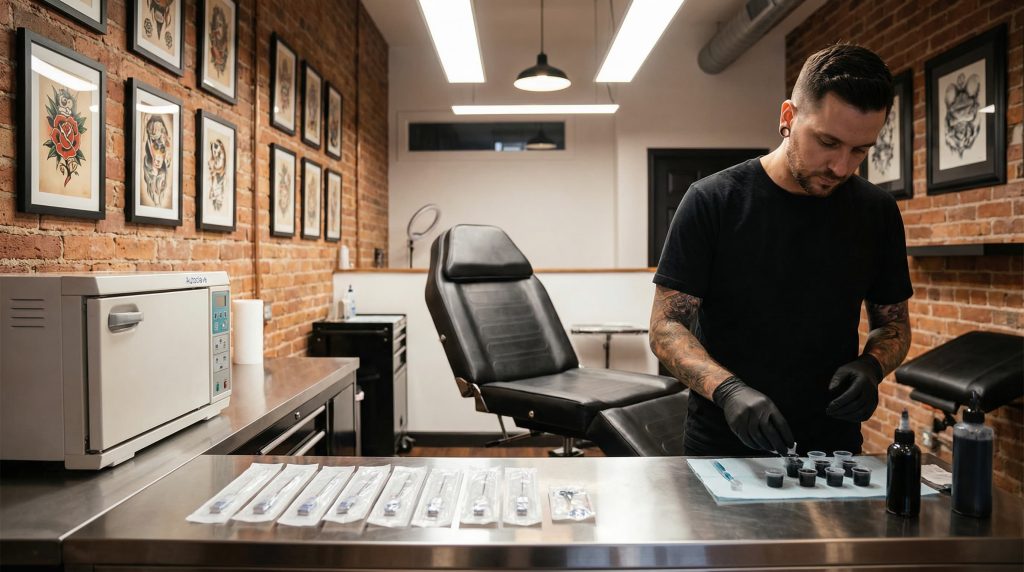
Then there are the viral concerns. Hepatitis B and C—those unwelcome visitors that take up permanent residence in the liver—can be transmitted through contaminated needles. HIV, whilst less efficiently transmitted through tattooing, remains a possibility when proper sterilisation protocols are ignored. Professional studios maintain rigorous hygiene standards, employing autoclaves for sterilisation, using single-use needles, and following protocols developed over decades of medical understanding. Your bathroom, however thoroughly cleaned, lacks both the equipment and the expertise to match these standards.
The FDA has additionally raised concerns about tattoo inks themselves. Professional-grade inks are manufactured under controlled conditions with some degree of quality oversight. The inks sold in DIY kits, often sourced from overseas suppliers with minimal regulation, may contain heavy metals, carcinogens, or contaminants that professional manufacturers would reject. One might argue that the democratisation of tattooing is admirable; one might also argue that the democratisation of surgery is inadvisable.
The Aesthetic Catastrophes Awaiting the Untrained Hand
Presuming, for a moment, that you somehow avoid infection, there remains the small matter of artistic execution. Tattooing is not merely the mechanical act of inserting ink beneath skin—it is a craft requiring years of apprenticeship, an understanding of how ink behaves over time, knowledge of colour theory, and the technical skill to translate a design from paper to the curved, moving canvas of human flesh.
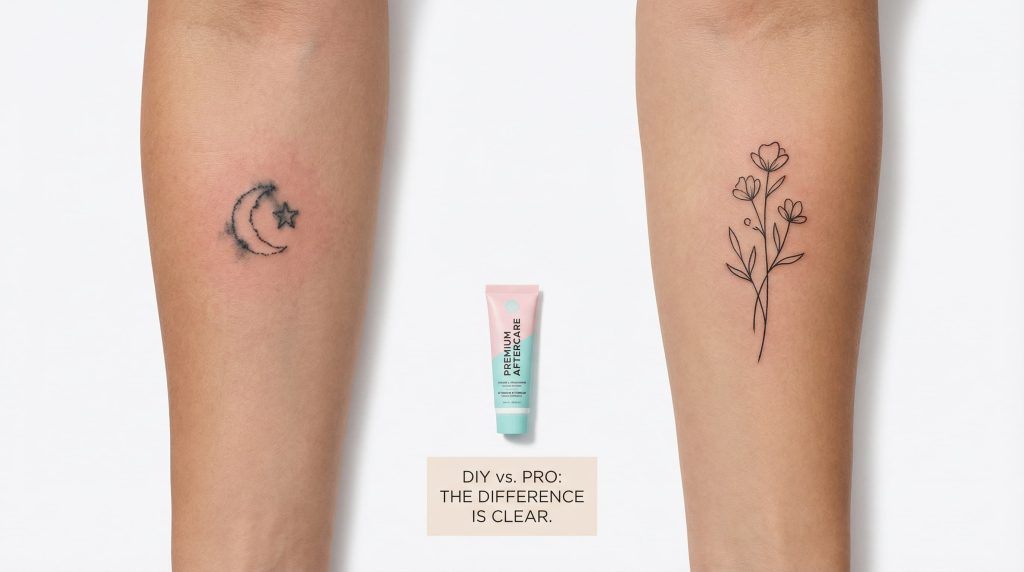
The DIY tattoo frequently suffers from what might politely be called “inconsistent line work.” Lines that should be straight wobble like a drunk attempting to walk a sobriety line. Curves that should flow smoothly appear jagged, as though drawn during an earthquake. The confident, bold strokes that define professional work are replaced by hesitant, shallow marks that fade unevenly—some areas retaining ink whilst others disappear entirely, creating a patchy, incomplete appearance.
Consider too the question of placement. Professional artists understand how designs interact with the body’s natural contours, how images will distort as muscles flex and skin ages, how certain areas are prone to fading whilst others maintain ink well. They know that choosing the right placement is as crucial as choosing the right design. The amateur, working upside-down on their own ankle or straining to see a hip tattoo in a bathroom mirror, lacks both the perspective and the expertise to make these considerations.
The result, more often than not, is tattoo regret of the most preventable variety. Not the romantic regret of a youthful indiscretion made in a moment of passion, but the rather more mundane regret of realising that one’s attempt at a minimalist moon actually resembles a malformed potato, or that the “meaningful” word tattooed on one’s wrist contains a spelling error that will require explanation for the remainder of one’s natural life.
The Allergic Reactions Nobody Mentions
Even when technique and sterilisation somehow align, the human body retains the right to object strenuously to foreign substances being injected beneath its surface. Allergic reactions to tattoo ink represent a genuine medical concern that DIY practitioners frequently overlook.
Red ink, historically and persistently, causes the most problems. The compounds that produce vibrant red pigments—cadmium sulfide in older formulations, various organic compounds in newer ones—have a particular talent for triggering immune responses. Allergic reactions may manifest immediately or, more insidiously, years after the tattoo’s completion, when the immune system suddenly decides that this foreign material is intolerable after all.
Symptoms range from persistent itching and raised bumps to severe dermatitis requiring medical intervention. In extreme cases, the allergic tissue must be surgically excised—a rather more dramatic removal process than the original application. Professional artists can advise on ink quality, perform patch tests, and have experience identifying early signs of adverse reactions. The bathroom DIY enthusiast, armed with mystery ink from an Amazon supplier, enjoys none of these safeguards.
The Scarring Nobody Anticipates
Beyond infection and allergic reaction lurks the spectre of permanent scarring. When a needle penetrates too deeply or the skin is worked too aggressively, the body’s healing response produces excess collagen—the raised, sometimes discoloured tissue we recognise as scarring. Keloid scars, which extend beyond the original wound site, are particularly problematic, creating raised ridges of tissue that can be more disfiguring than no tattoo at all.
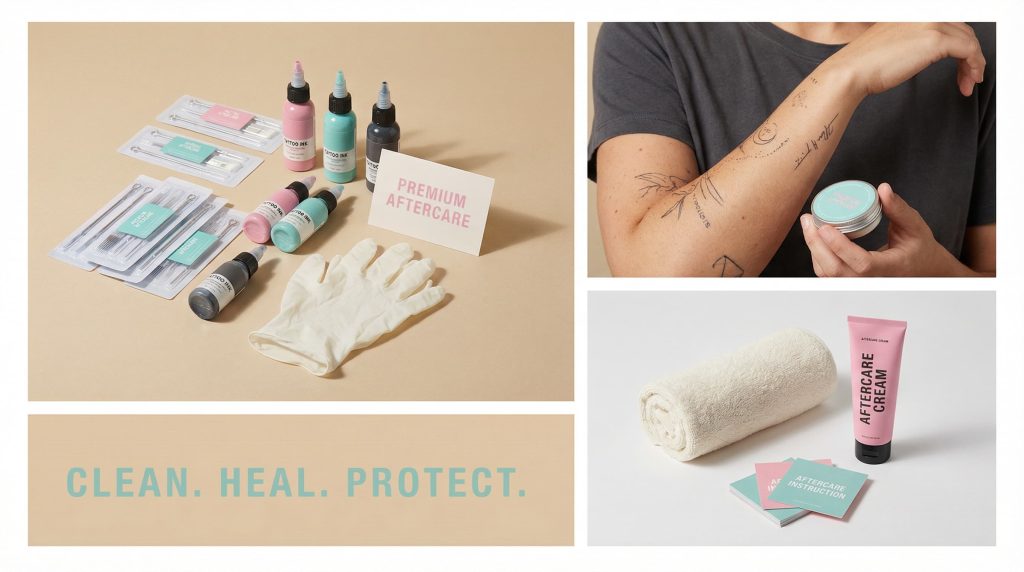
The healing process for tattoos requires careful management even under optimal conditions. Proper aftercare involves keeping the wound clean, applying appropriate moisturisers, avoiding sun exposure, and resisting the urge to scratch or pick at scabbing skin. This process becomes considerably more complicated when the initial trauma to the skin was excessive, when infection has set in, or when inappropriate aftercare products introduce additional irritants.
Professional studios provide detailed aftercare instructions based on established protocols. They know which products to recommend and which to avoid. They can identify early signs of healing complications and advise on appropriate responses. The DIY tattoo, by contrast, comes with whatever aftercare advice one can glean from internet forums—advice that may be outdated, inappropriate, or simply wrong.
The Legal and Medical Complications
In many jurisdictions, tattooing others without proper licensing constitutes a criminal offence. This applies even to the well-meaning friend who offers to poke a matching design onto your skin during a sleepover. The liability implications are substantial—should infection or injury result, the amateur tattooer may find themselves facing civil suits or criminal charges.
Medical professionals, meanwhile, have begun to raise concerns about the complications arising from DIY tattoo culture. The Mayo Clinic notes that tattoo-related infections have increased alongside the popularity of home tattooing, placing additional burden on healthcare systems and requiring treatments that could have been entirely avoided.
For those considering future medical procedures, DIY tattoos present additional complications. MRI scans can interact with certain tattoo inks, causing burning sensations or distorted images. Blood donation eligibility may be affected by tattoos received outside regulated settings. Even epidurals during childbirth raise questions when tattoos cover the lower spine, as medical professionals must assess whether needle insertion through the tattoo site poses risks of ink migration or infection.
The Better Path Forward
If the preceding paragraphs have seemed rather doom-laden, allow me to offer the antidote: professional tattooing exists precisely to mitigate these risks whilst delivering the body art you desire. The tattoo industry has spent decades developing safety protocols, training apprentices, and refining techniques to ensure that your permanent mark on the world is made safely and beautifully.
A reputable tattoo studio will employ licensed artists who have completed apprenticeships under experienced mentors. They will maintain visible sterilisation equipment, use single-use needles, and pour fresh ink for each client. They will discuss your design, advise on placement and sizing, and tell you honestly if your vision requires modification for technical reasons. This expertise is not merely a luxury—it is the difference between a cherished piece of body art and a lifelong reminder of a terrible decision.
For those concerned about cost, many studios offer payment plans or can suggest smaller designs that achieve the desired aesthetic within budget constraints. The investment in professional work pays dividends not merely in quality but in avoiding the substantially greater costs of tattoo removal or medical treatment for complications. A modest professional tattoo will always serve you better than an ambitious amateur disaster.
A Final Word on Impulse Control
The stick-and-poke impulse often strikes at midnight, when inhibitions are lowered and the needle seems to call seductively from its packet. One finds oneself thinking, “It’s just a small dot. How much harm could a small dot do?” The answer, as we have exhaustively established, is: considerably more harm than you might imagine.
Tattoos are permanent decisions that deserve permanent consideration. The design you adore at twenty-two may embarrass you at forty-two. The placement that seems clever today may complicate job interviews tomorrow. Even the best professional tattoo benefits from careful thought and planning—and amateur work, with all its attendant risks, deserves even greater scrutiny.
If, after reading this comprehensive catalogue of potential disasters, you remain determined to tattoo yourself, I can only urge you to research thoroughly, invest in the best possible supplies, maintain obsessive hygiene standards, and have medical professionals on speed dial. But truly, might I suggest instead that you save your money, research your artist, and submit yourself to the capable hands of someone who knows what they’re doing? Your skin, your health, and your future self will thank you for the restraint.
After all, body art should be a celebration of self-expression, not a cautionary tale told in emergency rooms and dermatology clinics. Choose wisely, dear reader. Your epidermis is counting on you.