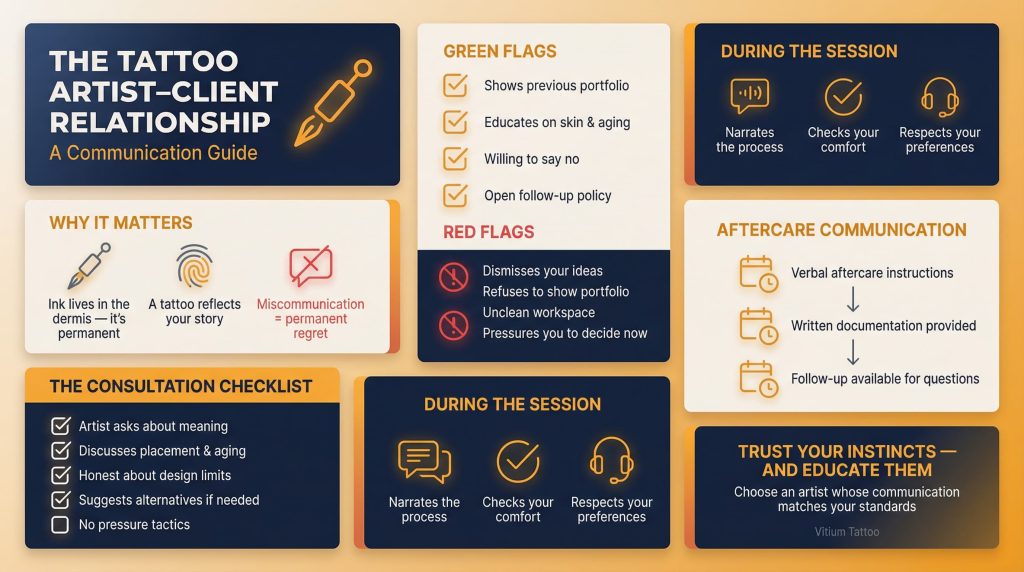
There exists, in the peculiar universe of permanent body modification, a relationship quite unlike any other in the service industry. It is not the transactional exchange between customer and shopkeeper, nor the clinical detachment of doctor and patient, nor even the creative collaboration between artist and patron – though it contains elements of all three. The relationship between tattoo artist and client is, when it functions properly, something rather magical. When it malfunctions, however, it can leave you with more than just buyer’s remorse; it can leave you with a permanent reminder of what happens when communication goes spectacularly awry.
I once heard of a gentleman who requested a portrait of his beloved grandmother, only to emerge from the studio with what appeared to be a somewhat sinister rendering of a Victorian-era ghost. The artist, it transpired, had interpreted “classic and timeless” rather differently than the client had intended. This particular debacle could have been avoided entirely with proper communication – that wonderful, underrated skill that separates the merely competent from the truly excellent in any creative profession.
The Foundation: Why Communication Matters More Than You Think
Let us begin with a rather sobering scientific reality. Research published in the American Academy of Dermatology reminds us that tattoos involve depositing ink into the dermis – the second layer of skin – where it becomes essentially permanent. The body’s immune system does attempt to remove these foreign particles over time (which explains why tattoos fade), but for practical purposes, what goes on your skin stays on your skin. This biological permanence elevates every interaction between artist and client from casual conversation to consequential dialogue.
The psychological dimension is equally significant. Studies in dermatological psychology have demonstrated that body image and self-perception are intimately connected to our skin’s appearance. A tattoo that accurately represents your vision becomes an extension of your identity, a source of daily satisfaction. A miscommunicated design, however, becomes a persistent source of cognitive dissonance – your skin telling a story you never intended to narrate. This is precisely why asking your tattoo artist the right questions from the outset is absolutely essential.
The Art of the Consultation: What Excellence Looks Like
A truly skilled tattoo artist approaches the consultation with the seriousness of a surgeon and the curiosity of an anthropologist. They understand that you are not merely selecting a design from a catalogue, but attempting to translate something deeply personal into visual form. The hallmarks of excellent communication during this phase are unmistakable once you know what to observe.
First, notice whether your artist asks questions before offering solutions. The exceptional practitioner will inquire about the meaning behind your chosen design, the occasions on which you hope to display or conceal it, your pain tolerance (and please, do be honest about this), and any previous tattoo experiences you may have had. They are gathering intelligence, not merely processing an order. This approach aligns perfectly with the principles outlined in our guide to finding the right tattoo artist for your unique needs.
Second, observe their willingness to educate. A confident artist will explain how certain designs age differently on various skin tones and body locations. They will discuss how the natural movement of your body affects line work over time – that delicate mandala on your inner elbow may not remain quite so geometric after a decade of bending. They will tell you the truth even when the truth is not what you wish to hear, which brings me to perhaps the most crucial indicator of quality.
The willingness to say “no” – or more diplomatically, “let me suggest an alternative” – is paradoxically one of the most reassuring qualities in a professional tattoo artist. If your chosen design is technically impossible, if the placement will result in inevitable distortion, or if the style simply doesn’t suit their expertise, a professional will tell you. They may recommend modifications. They may refer you to a colleague better suited to your vision. What they will not do is nod along pleasantly while secretly knowing the end result will disappoint you both.
During the Session: Communication That Keeps You Safe and Satisfied
The conversation doesn’t end when the needle begins its work. In fact, the dialogue that occurs during the actual tattooing process is perhaps even more critical, particularly regarding hygiene and safety standards that every reputable studio must maintain.
A communicative artist will explain what they’re doing as they do it. “I’m going to outline first, then we’ll take a break before the shading” is the sort of narration that transforms an anxious experience into a collaborative one. They will check in regularly about your comfort level without making you feel like a nuisance for having nerve endings. “How are we doing?” asked at appropriate intervals is music to the ears of anyone lying prone while their epidermis is being systematically perforated.
Equally important is the artist who creates space for you to communicate in return. Some clients prefer to chat throughout the session, finding that conversation distracts from discomfort. Others prefer meditative silence, focusing on their breathing or losing themselves in music. The perceptive artist reads these preferences without requiring explicit instruction, though they will certainly accommodate a direct request. “I’d like to just zone out with my headphones if that’s alright” should never be met with resistance or hurt feelings.
The FDA’s guidance on tattoo safety emphasizes the importance of understanding aftercare instructions before leaving the studio. A quality artist will provide these instructions verbally, ensure you understand them, and typically provide written documentation as well. If you leave a studio uncertain about whether you can shower, when to apply moisturizer, or what constitutes a normal healing response, something has gone wrong in the communication chain.

The Red Flags: Warning Signs That Demand Attention
Now we arrive at the less pleasant but rather essential portion of our discussion: recognizing when communication has broken down to such a degree that you should seriously consider walking away. These tattoo artist red flags, once recognized, become impossible to ignore – and ignoring them leads to the sort of tattoo regrets that haunt people for years.
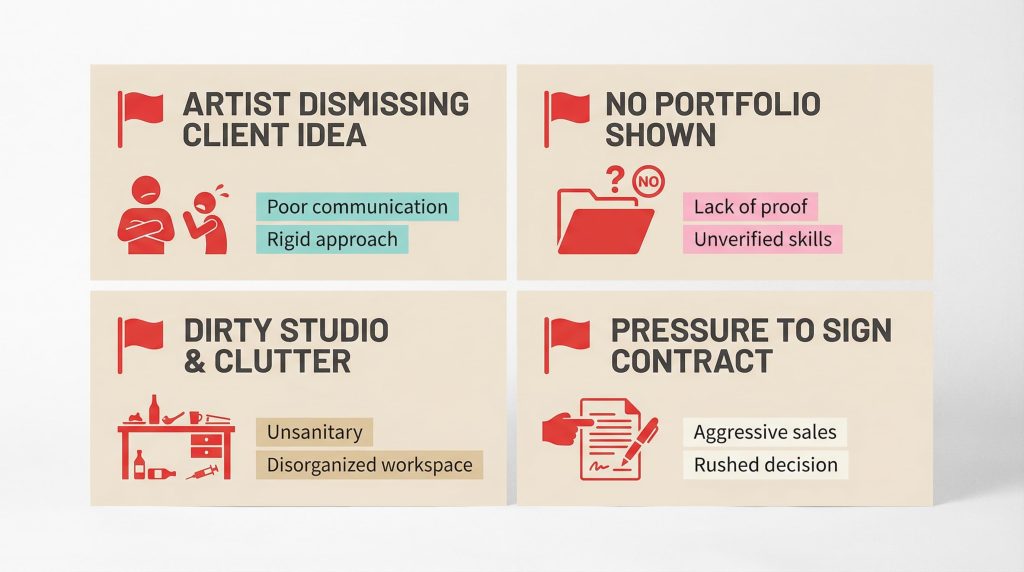
The first red flag waves prominently when an artist seems dismissive of your ideas or, conversely, agrees to absolutely everything without question. Both extremes indicate a failure to engage genuinely with your vision. The dismissive artist has already decided what you should want; the sycophantic artist cares more about securing your business than ensuring your satisfaction. Neither will produce results that honour your original intention.
Be particularly wary of artists who resist showing previous work or become defensive when asked about their experience with your chosen style. Every artist has specialties and limitations. An honest practitioner will candidly acknowledge when a design falls outside their wheelhouse. An insecure one will bluster and deflect. Similarly concerning is the artist who quotes a price without thoroughly discussing the design, size, and placement – this suggests either inexperience or a cavalier attitude toward the business relationship you’re entering.
Physical red flags matter enormously as well, and they speak to communication about professionalism. Is the studio clean? Does the artist open fresh needles in front of you? Are they wearing gloves, and do they change them appropriately? An artist who cuts corners on visible safety protocols is almost certainly cutting corners elsewhere. Your body is not the appropriate venue for cost-saving measures.
Perhaps the most subtle but significant warning sign is a feeling of pressure – to decide immediately, to commit to a larger piece than you intended, to proceed despite lingering doubts. The excellent artist understands that a client who feels pressured today becomes a dissatisfied client tomorrow, and potentially a vocal critic thereafter. They create space for deliberation because they value the relationship over the transaction.
After the Ink Dries: The Continuing Conversation
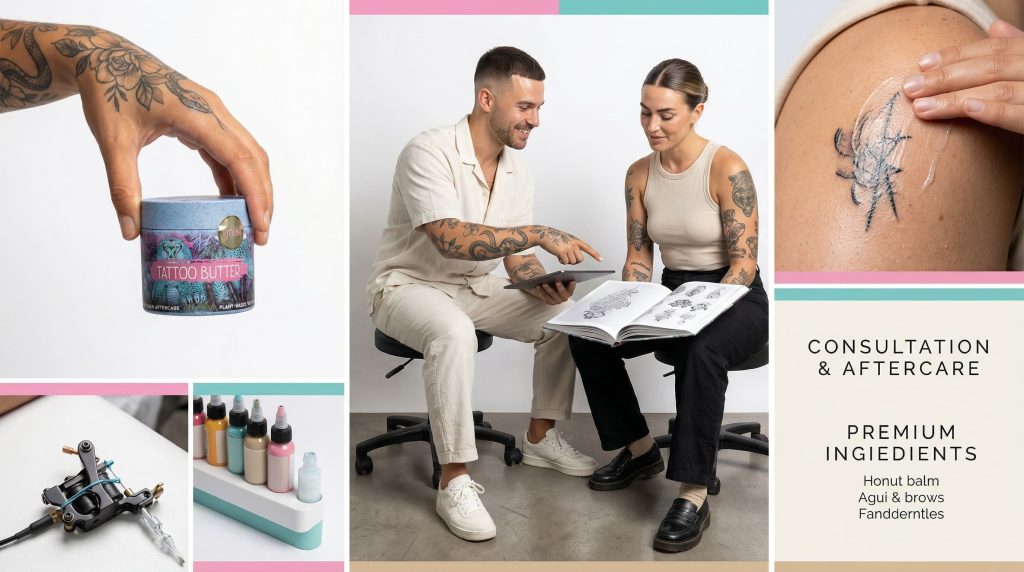
The relationship between artist and client ideally extends well beyond the studio door. Proper tattoo aftercare is essential for preserving your investment, and a quality artist remains available for questions during the healing process. Unusual redness? Unexpected peeling? These concerns deserve professional input, and a communicative artist welcomes such follow-up rather than treating it as an inconvenience.
Many excellent artists offer complimentary touch-up sessions if the healing process has affected certain areas – this speaks to a commitment to the work that extends beyond immediate payment. They want their art to look its best not merely on the day it was created, but for years to come. This is not mere customer service; it is artistic integrity manifested through aftercare essentials and ongoing support.
The Final Word: Trust Your Instincts, But Educate Them First
Ultimately, the artist-client relationship succeeds or fails based on mutual respect, clear communication, and shared investment in the outcome. You are entrusting someone with your body – quite literally – and they are entrusting you with their professional reputation. This reciprocal vulnerability, when acknowledged and honoured by both parties, creates the conditions for remarkable work.
Before your next session, take time to clarify your own thoughts. Know what you want and why you want it. Prepare questions but remain open to expertise that may reshape your vision. Choose an artist whose style resonates with yours, whose communication approach matches your preferences, and whose professional standards are beyond reproach.
The permanent nature of tattoos means that every conversation leading up to and following the procedure carries weight. Invest in those conversations accordingly. Your future self, gazing at skin that tells precisely the story you intended, will thank you for it.