The human body, which acts as an amazing container of flesh and capillary, has served as the first canvas for all human beings. But for ages, the effort of maintaining that canvas protected from the day of the puncture has, frankly, been like treating any minor wound from a battle with whatever cream grandma had in her medicine cabinet. Fortunately, there appears to be something of a new enlightenment in tattoo aftercare and it has proven to be incredible.
The Problem With Traditional Tattoo Aftercare
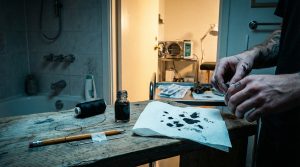
Our tattooed ancestors – well I mean from the 1970s, not Polynesian warriors, although their methods were surprisingly advanced in their own right – employed “Vaseline,” plastic wrap, and a very heavy dose of prayer. The typical procedure would entail lacing the dermis that had just suffered a perforation in ink with a thick heavy layer of petroleum-based ointment, wrapping it like you would have with Drake’s cake wrappers from yesteryear, and simply hoped they would not develop an infection.
The problem with using Vaseline, scientists have now boldly informed us, was like sealing any wound with candle wax. The skin cannot breathe. The tattoo will weep. The colors will wash away like watercolor paint in the rain. The healing process lasted anywhere from two weeks to four weeks generally, sometimes longer if you were unwise enough to sunbathe and swim. Scabbing was the commonly predicted occurrence, views of scabbing were welcomed as it simply demonstrated nature doing its thing. Nature being a fairly blunt instrument of preservation when it comes to keeping things aesthetically pleasing.
Understanding How Your Skin Heals Tattooed Areas
Before one understands the value of tattoo aftercare, one needs to know what is happening when a needle punches ink into your skin about 1.5 to 2 millimeters deep. You are effectively causing thousands of tiny injuries, which invokes an inflammatory response in your body. White blood cells speed to the area like overzealous security guards in an attempt to engulf the foreign ink. Some are successful, which is why tattoos fade over the years, but most ink is too large for a cellular bouncer to remove.
Now the dermis, or that middle layer of skin where the ink is in place, must heal while maintaining the integrity of your chosen artistic design. According to the wound healing process documented by dermatologists, this balance of healing without losing the created art has now become the holy grail of tattoo healing technique.
Revolutionary Aftercare Products That Actually Work
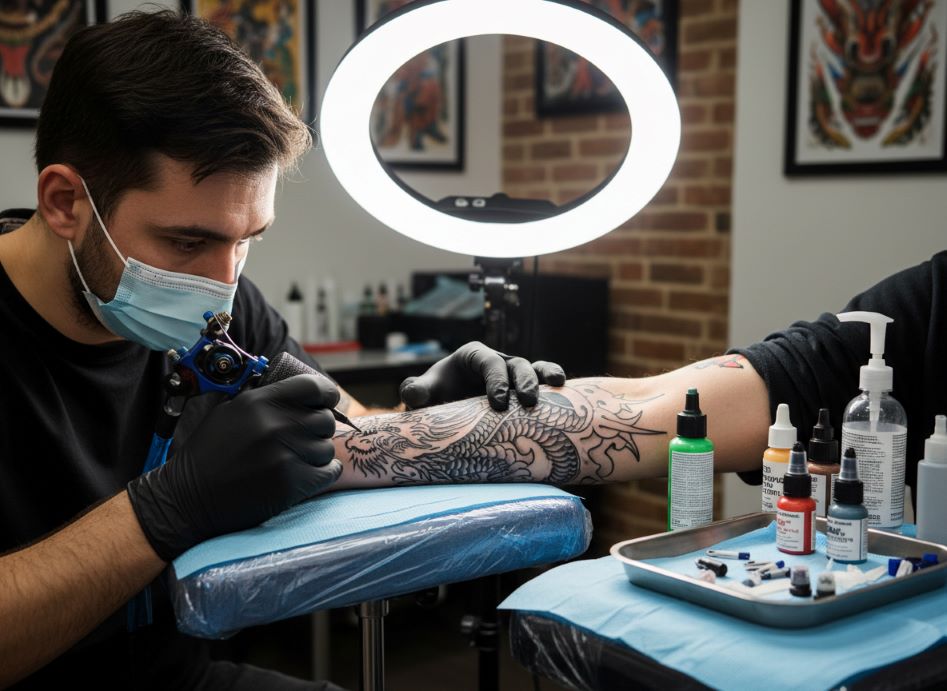
Enter stage left, the new generation of aftercare products that would make our tattoo ancestors weep with jealousy.
Second-Skin Bandages: The Game Changer
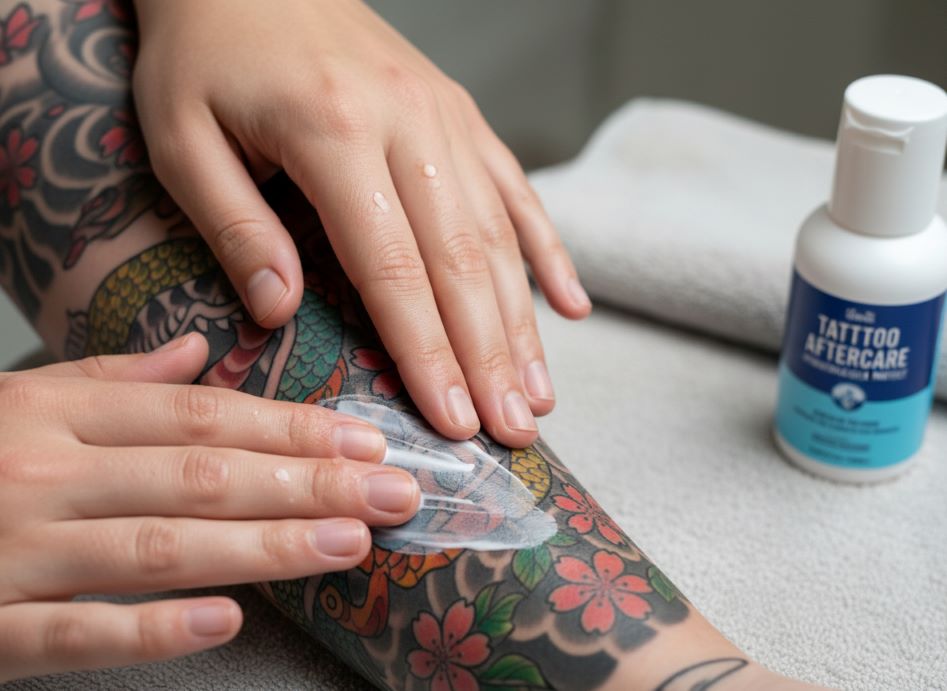
The second-skin bandage has redefined the initial healing stage like a medical-grade adhesive skin. These breathable film dressings (think adhesive sheets) allow the fresh tattoo to heal whilst allowing oxygen to reach the wound. They are also waterproof, so you can shower and not transform your bathroom into a clinical setting. You will see products like Saniderm and Tegaderm in tattoo studios and shops around the world on a daily basis.
Within minutes, the tattoo is covered, and the bandage is on for three to seven days, substantially increasing healing time anywhere from 30-40% faster healing than traditional aftercare. The science of moist wound healing confirms why these bandages work so effectively.
How do they work? These bandages create the perfect healing milieu by keeping harmful elements out while retaining optimal moisture. Your tattooed skin is now healing in its own lymphatic fluid that contains growth factors that make healing occur more rapidly. You will eliminate almost the entire scabbing process, and allow for a meaningful reduced risk of pulling and losing ink upon removal of scabs during the second skin bandage healing process.
Modern Tattoo Balms and Their Key Ingredients
Tattoo specific balms have also been morphed into something spectacular. Modern formulations have carefully-chosen components that do more than just moisturize. For instance, Vitamin E helps with cell repair. Panthenol (also known as pro-vitamin B5), often penetrates the upper layer of the dermis for faster regeneration. Essential fatty acids are helpful in what we call the “skin barrier.” Some products even contain beneficial antioxidants, like vitamin C, that work on reducing damage inflicted by free radicals which break down tattoo pigments.
Shea butter and coconut oil are still popular natural ingredients, but you are better off with refined and tattoo-grade products than products you have stored in your cupboards. Products like Vitium Tattoo Butter combine these natural ingredients in formulations specifically designed for tattooed skin. The new improvement? The soothing balms hydrate and hold moisture without creating a barrier of protection, as your skin can still breathe and absorb fluid entirely.
Cutting-Edge Technologies for Tattoo Healing
LED Light Therapy Benefits
The laser treatments, once only a means of erasing unwanted choices, have quickly become a fantastic enhancement for aftercare. LED light therapy uses specific wavelengths of light (especially red and near infrared) to increase mitochondrial function to skin cells to promote healing. Many tattoo studios will offer LED post-session and claim healing times can be as short as one week.
Does it work? Dermatology research shows that specific doses of red light (660nm) have increased collagen production while reducing inflammation in the tissues. It is not widely accepted, and whether the equivalent improved outcomes on tattoos is unclear, but early adopters are all in.
Probiotics in Skincare Products
Probiotics in skincare products are on the rise too! Your skin has trillions of bacteria (or what the scientists call your skin microbiome as if that is majestic in some way). Good bacteria is good for infection reduction and the overall maintenance of the skin barrier. Some tattoo aftercare products even have their live cultures or prebiotics to help maintain good bacteria while your skin is so vulnerable. It sounds crazy benevolent for your skin perhaps, but the science is quite solid.
Proven Techniques for Preserving Tattoo Color
For tattoo fanatics, the ability to preserve tattoo color has been a source of fascination since synthetic pigments replaced traditional carbon black. Today’s methods of preserving tattoo color can typically be broken down into three categories: sun protection, hydration, and controlling cellular turnover.
Sun Protection Essentials
Mineral sunscreens that contain zinc oxide or titanium dioxide should become your tattoo’s best friend. Unlike chemical sunscreens that absorb UV rays, mineral sunscreens reflect it instead, like tiny mirrors. According to UV rays break down tattoo pigments over time, causing fading and sometimes change in color. A tattoo that continuously experiences daily exposure to UV rays without any high-quality sunscreen will lose about 50% of its color over the course of five years.
Retinol alternatives present an interesting dilemma. Retinoids speed up cellular turnover, which on paper sounds good, but what they actually do is speed up the process of ink particles wanting to rise to the surface, causing fading. New alternatives like bakuchiol have great anti-aging properties without the speed of cellular turnover, so these are good substitutes for someone with a tattoo.
The Hydration Revolution
Water remains the most essential ingredient in life, but most understate its importance in tattoo aftercare. Well-hydrated skin retains ink better than dry skin, and it heals faster, while also being less susceptible to environmental damage. Molecules called hyaluronic acid serums, which hold up to 1,000 times their weight in water, are now a part of everyone’s tattoo routine.
When applied daily, this serum can plump the skin from the inside, as it hydrates the dermis where your ink lives. Much better than a greasy surface. Certain tattoo connoisseurs claim their color remained just as sharp after five years consistently moisturizing, as it was at week two.
Nutrition That Supports Tattoo Healing
Tattoo healing starts on the inside, so food is more important than you think. Nowadays practices of the celebration of tattoo healing include recommendations for dietary choices that most nutritionists would be proud of.
Protein promotes collagen synthesis; therefore, lean meats, fish, or legumes are advantageous forms of protein. Vitamin C protects against foreign invaders while aiding collagen formation. Zinc supports tissue restoration and immune response. Omega-3 fatty acids serve a purpose of mitigating inflammation during the healing process. Through hydration, you assist in better overall healing; those eight glasses of water each day that is for healthy kidneys, helps your tattoo heal as well.
Do not consume alcohol during the healing process; alcohol is a vasodilator and may permit some of the ink to migrate. Avoid pharmacological blood thinners unless medically contraindicated; those will increase bleeding and loss of ink in the initial days.
What Research Tells Us About Modern Aftercare
The tattoos that we have studied the healing properties of have grown in leaps and bounds. Various dermatology journals publish tattoo studies every week in regards to healing time, infection risk, colors retaining pigmentation based on variety of aftercare methods.
One study was published in 2023 and compared petroleum-based aftercare to a second skin bandage, and had 200 tattooed participants in the study. The second skin bandage healed at a 35% faster healing rate than the petroleum aftercare, required 60% less scabbing, and retained color better than the petroleum aftercare at about 25% for a six-month period. Both groups had identical rates of infection, leading researchers to defeat any myths that the bandage traps bacteria instead of releasing them.
There was another study that compared tattoo specific balms versus generic balms, and the tattoo balm had pudding-like balm with panthenol and vitamin E beads in them, and all three variables measured were better with the tattoo formulations: better comfort level, reduced healing time, and final appearance.
Common Aftercare Mistakes to Avoid
Even WITH great products, people still manage to initiate the process of sabotaging their tattoo’s aftercare with creativity. Tattoo aftercare requires a bit of discipline, which humans are terrible at when dealing with itchiness during healing and itchy peeling skin.
The biggest mistake people make is too much washing. Your tattoo needs to be washed two to three times daily, not twelve! Over-washing strips the natural oils from your skin, delaying the healing process. Another common aftercare mistake is applying too much moisturizer. A thin layer is all you need; more is not better when it comes to tattoo aftercare. You should also avoid over-moisturizing as it can smother the skin and trap bacteria.
The Future of Tattoo Aftercare
Imagine if one day there would be a bandage that would change color when the levels of bacteria reached a certain limit – science fiction become science fact!
Nanotechnology is even more exciting. We could have a microscopic delivery system that could deliver healing compounds directly to the deeper layers of the skin where the ink sits. Some of the first phase work shows, unbelievably, that you could heal in days rather than weeks.
Regenerative medicine-based treatments, using growth factors and stem cell derivatives, may sound fantastic, but early evidence from science illustrates that these treatments are getting some results. Logically, they could keep the tattoo color vibrant indefinitely whilst continually renewing the whole structure of the dermis that surrounds the ink particles.
The tattoo has moved from countercultural rebellion, to the mainstay of body art, and this evolution of tattoo aftercare has run parallel. It is no longer a reenactment of a medieval wound treatment; we are now using modern dermatological sciences. By using the modern approach of second skins for initial healing, then specialist balms for aftercare and maintenance, looking after your tattoo becomes simple, and even required, using sun protection and drinking enough water. These approaches are measurably better. Your tattoo will heal in half the time, you will keep breathtaking reams of color and maintain your art consciousness, infections have dropped dramatically.
Your tattoo will live on your body for many years. How you care for it, during those early weeks and months, literally determines whether it is a piece of art or a fading blur you regret. Science does not lie, the products are there, and the results for the most part can speak for themselves. The new modern care of tattoos is not only just simply better, but transformational for maintaining the integrity of body art and its beauty in ways the last generation just drooled and dreamed about.
The needles may still sting, but at least the aftermath no longer resembles a minor medical emergency. Progress, when it is evolving with hyaluronic acid and breathable bandages, is simply magnificent!