Now then. Let us discuss something rather delicate, shall we? Something that combines two of humanity’s most magnificently irrational impulses: the desire to permanently mark one’s skin, and the conviction that one’s current romantic attachment shall endure until the heat death of the universe.
I speak, of course, of matching tattoos. 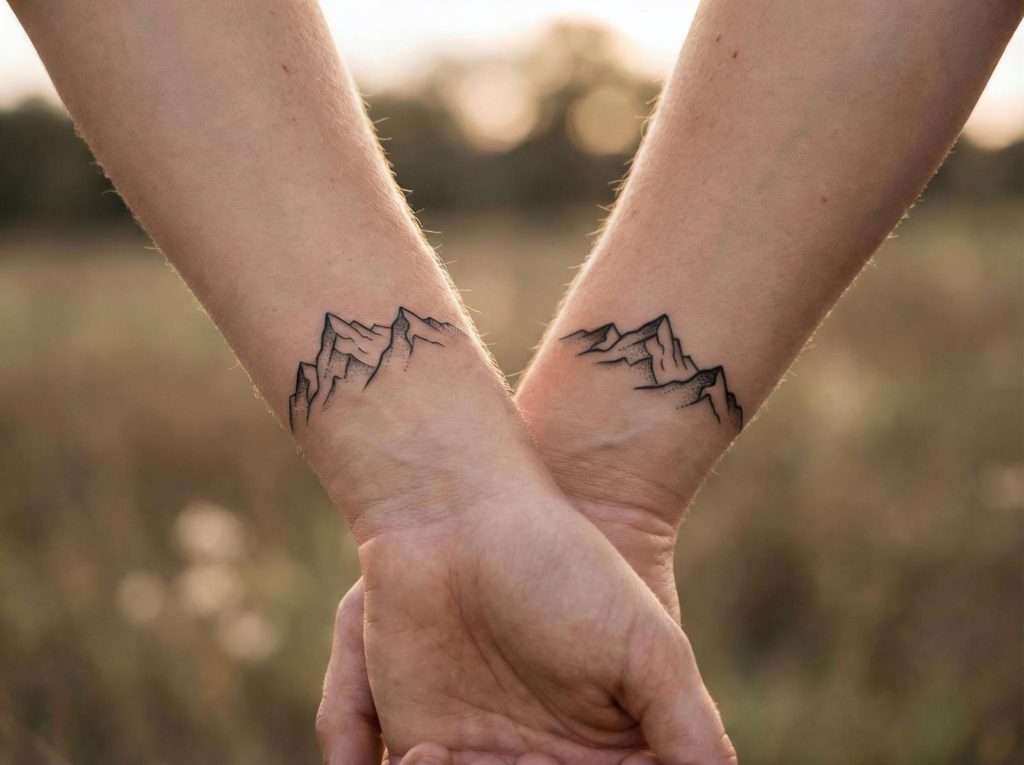
Before you dismiss this as the exclusive territory of teenagers and reality television contestants, consider that the practice of marking skin to signify connection is older than written language itself. Archaeological evidence suggests that Bronze Age communities tattooed their members with identical symbols to denote tribal belonging. The Scythian warriors of the Eurasian steppes bore matching marks that identified them as brothers-in-arms. Even the rather more recent tradition of sailors getting identical anchors wasn’t merely decorative—it was a pledge of mutual rescue should one find oneself inconveniently drowning.
The impulse, you see, is profoundly human. We are social creatures who crave visible proof of our bonds. The question isn’t whether matching tattoos are meaningful—they absolutely are. The question is whether they’re wise.
The Neurochemistry of “Forever”
Here’s where things get rather fascinating, and I do hope you’ll indulge me a brief expedition into the squidgy territory of neuroscience.
When we fall in love—proper, dizzying, can’t-eat-can’t-sleep love—our brains become veritable cocktail bars of neurochemicals. Dopamine floods the reward centres, creating that delicious sense that everything is finally right with the world. Oxytocin, the so-called “bonding hormone,” surges during physical intimacy, convincing us that this particular human is our destined other half. Norepinephrine heightens our focus on our beloved to the exclusion of rather important things like work, friends, and the fact that they leave wet towels on the bed.
This neurochemical storm, while utterly wonderful to experience, is not what one might call an optimal decision-making environment.
Research published in the Journal of Social and Personal Relationships found that couples in the early stages of romance—typically the first eighteen months—demonstrate measurably impaired risk assessment when making decisions about their partner. The same cognitive bias that makes us overlook our beloved’s irritating laugh also makes us rather optimistic about the permanence of our union.
This is not a moral failing. This is evolution doing precisely what evolution does: encouraging pair bonding for the continuation of the species. Mother Nature, it turns out, is not terribly concerned with whether you’ll still be delighted with that matching infinity symbol in 2037.
The Statistics Nobody Mentions
Let us be grown-ups for a moment and examine some numbers, even if they’re rather sobering.
A comprehensive study by the British Association of Dermatologists found that approximately one in three people with tattoos eventually experience some degree of regret. That’s a third of all tattooed individuals, regardless of design or placement. Now, the study didn’t specifically isolate relationship tattoos, but subsequent research by Advanced Dermatology surveyed over 600 Americans and discovered that 78% of people with a tattoo of an ex-partner’s name regretted it.
Seventy-eight percent.
Let that settle in your mind like sediment in a particularly disappointing bottle of wine.
But here’s the genuinely interesting bit: regret rates for matching tattoos that aren’t names—coordinating symbols, complementary designs, puzzle pieces, and the like—were significantly lower. About 36%, which is still substantial but considerably less catastrophic. The difference? Names are explicit and unambiguous. A heart with “DAVE” blazoned across it rather limits your options should Dave prove less permanent than anticipated. A geometric mountain range, however, can mean whatever you need it to mean as your life circumstances evolve.
The Taxonomy of Matching Tattoos
Not all matching tattoos are created equal, and I think it’s worth establishing a hierarchy of risk before anyone does anything they might need to explain to future partners.
Category One: Names and Portraits (Maximum Risk)
This is the deep end of the pool, and the water is full of regret. Tattooing a romantic partner’s name or, heaven preserve us, their face onto your body is an act of such staggering optimism that I’m almost inclined to admire it. Almost. The removal statistics speak for themselves: laser tattoo removal clinics report that partner names constitute their single most common procedure, with “KEVIN” and “SARAH” apparently leading the charge into the laser’s purifying light.
Category Two: Explicit Relationship Symbols (High Risk)
Wedding dates, “his and hers” designations, interlocking hearts, puzzle pieces that only make sense together—these designs announce their purpose unmistakably. They’re marginally easier to modify than names, but they still carry the awkward requirement of explanation once the relationship has shuffled off its mortal coil.
Category Three: Complementary Designs (Moderate Risk)
Now we’re getting cleverer. Sun and moon. Lock and key. Two halves of a constellation. These designs work together but can also stand alone as complete artistic statements. Your moon tattoo doesn’t require the existence of a sun to make visual sense; it simply gains additional meaning when its partner exists. This is insurance, and rather good insurance at that.
Category Four: Identical Meaningful Symbols (Lower Risk)
Both partners getting the same mountain, the same coordinates, the same abstract design commemorating a shared experience—this carries the lowest risk because the tattoo’s meaning is entirely internal. No stranger examining your wrist will deduce that it was meant to match someone else’s. Should the relationship end, the tattoo simply becomes a memento of a particular time in your life, like a photograph you no longer display prominently but don’t feel compelled to burn. 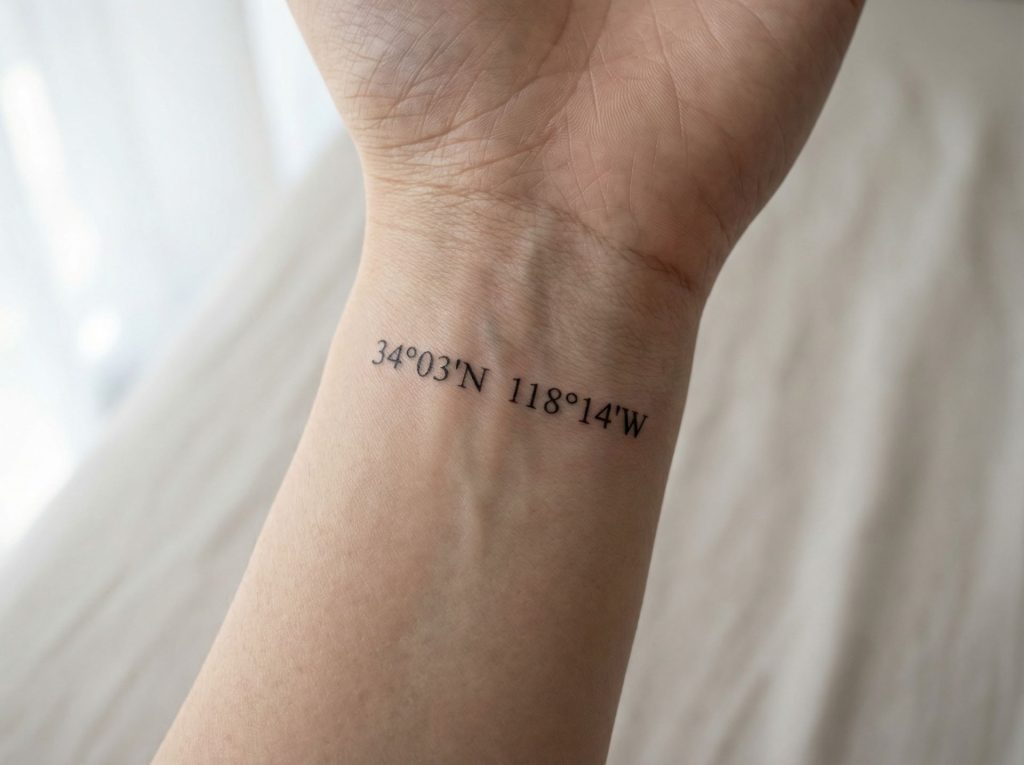
The Friendship Exception
I should note that everything I’ve said about romantic matching tattoos applies rather differently to friendship and family tattoos. The statistics shift dramatically in favour of satisfaction when the matching ink commemorates non-romantic bonds.
Siblings getting coordinating tattoos, best friends marking decades of companionship, parent and adult child sharing a symbol—these arrangements show regret rates closer to 12%, which is roughly the baseline regret rate for any tattoo decision whatsoever. Why? Because friendships and family bonds, while certainly capable of rupture, don’t typically end in the spectacular conflagrations that romantic relationships specialise in. Nobody has ever burned their best friend’s belongings on the lawn because they forgot to text back promptly.
The Questions You Must Ask (And Actually Answer)
Before you and your beloved march into the tattoo studio, I would suggest subjecting yourselves to a brief interrogation. Consider it couples therapy with a practical outcome.
“Would I still want this tattoo if we separated?”
Not “will we separate”—that’s the wrong question, and nobody enters a relationship expecting failure. Rather: if circumstances beyond your control ended this relationship tomorrow, would this specific design still hold meaning for you? If the answer is no, you’re not commemorating your love; you’re betting on your love. Those are different things.
“Does this design work as a standalone piece?”
Show the design to someone who knows nothing of your relationship. Does it read as complete? Does it have artistic merit independent of its matching element? If it requires explanation to make sense—”oh, my partner has the other half”—then you’ve created a puzzle piece, not a work of art.
“Have we been together long enough to have perspective?”
The eighteen-month mark isn’t arbitrary; it roughly corresponds to when the initial neurochemical storm begins to subside and you start seeing your partner as a complete human being rather than a divine gift specifically arranged by fate for your personal happiness. Tattoo decisions made after this point tend to be more considered.
“Is this pressure, or desire?”
If one partner is significantly more enthusiastic than the other, proceed with extreme caution. A matching tattoo should never be a test of commitment or a concession extracted through emotional negotiation. It should be mutual enthusiasm, or it should be nothing.
Clever Alternatives That Actually Work
For those who adore the idea of shared ink but harbour reasonable concerns about permanence, consider these approaches:
The Coordinates Approach: Both partners tattoo the coordinates of a meaningful shared location—where you met, where you married, where you first said something significant. These numbers remain beautiful and meaningful regardless of relationship status, and you can always claim it’s your grandmother’s birthplace if questioned.
The Artistic Interpretation: Instead of identical designs, commission an artist to create two pieces inspired by the same source material. You both love the ocean? One gets a wave, one gets a nautical star. The connection exists but isn’t dependent on the other piece.
The Temporal Commemoration: A small symbol representing a shared experience rather than the relationship itself. You climbed a mountain together? A tiny peak. You survived something difficult? An abstract representation of that survival. The tattoo marks what you did, not what you are to each other.
The Waiting Period: Some couples agree to design their matching tattoos but wait one full year before getting them. If the relationship survives, and the enthusiasm survives, proceed with significantly more confidence. If either falters, you’ve saved yourself considerable trouble.
The Final Word
Matching tattoos are neither inherently foolish nor inherently wise. They are permanent decisions made by impermanent beings about impermanent relationships, which is to say they are perfectly human.
The key lies not in avoiding them altogether—that would deprive us of genuine expressions of love and connection—but in approaching them with the same clear-eyed consideration we’d apply to any permanent decision. You wouldn’t buy a house in the throes of passionate excitement without having it surveyed. You wouldn’t sign a business contract without reading the terms. Yet somehow we convince ourselves that matters of the heart should be exempt from practical consideration.
They shouldn’t. Love deserves better than impulsive decisions. It deserves the kind of thoughtfulness that says: I love you enough to think carefully about how we mark this love. I love you enough to choose a design that honours us both, whatever the future holds.
And really, isn’t that rather more romantic than a hasty decision made in a tattoo parlour at midnight?
I rather think it is.